In one of our previous articles, we discussed the “rule of threes” of survival. One of the points we covered was that without adequate shelter, it is possible to die of exposure in as little as three hours in extreme weather situations. We then covered some of the basic tools for surviving the three weeks without electricity. This week we’re going to extend beyond the three-week emergency and look at the possibility of surviving the winter using stored fuels.
We’ve already talked about some of the appliances that would help keep you comfortable, but those appliances won’t do you any good if you don’t have fuel to keep them going. To learn about which appliances you should have, be sure to check out our previous articles: Rule of Threes and Preparing for Three weeks without Electricity.
Wood
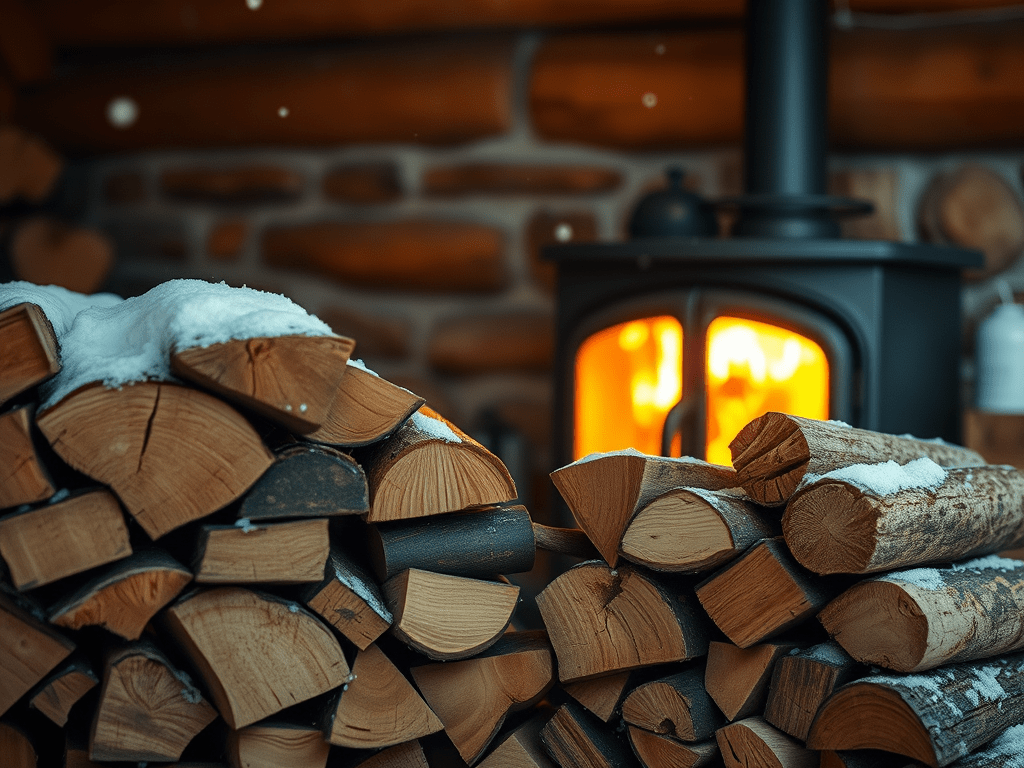
Having wood for heating is our go to fuel for winter heating. Every year, our goal is to store an entire season’s worth of wood so that we don’t have to purchase any wood during the height of the season when prices go up.
We also prepare our woodstove for the winter by making sure that our flue is cleared out before the season begins. We also check it periodically throughout the season to ensure the chimney remains clear and free of debris and creosote.
Gasoline Rotation
In the winter we keep our vehicles as full as possible. There are a couple of reasons for this. The first is, we don’t want our gasoline to get moisture in it. Moisture will not accumulate in a full tank. The second is that we don’t want to run out of gas if the there’s a widespread power outage and the local gas pumps are not functioning.
Also, we keep 5 gallons of fuel for our generator in a gas can. Rather than using a fuel additive, whenever we go to refill our vehicles, we dump the fuel in the gas can into the vehicle and then finish filling the vehicle and refill the gas can. This way we know that we always have fresh gasoline.
If we think that we might need to use our generator, we fill it before a weather event that could cause an electrical outage.
Always store your gasoline in a well-ventilated area away from heat sources.
Propane Storage
If you have an appliance that runs on propane, be sure all your propane containers are kept full. There’s nothing worse than being dependent on a heater, having it go empty during a storm and not being able to fill it because of the weather. Plus, by having it full before an event, you won’t have to be among the people waiting to get their propane after the event. You also won’t have to worry about the increased cost of propane that often occurs after cold weather and you won’t have the frustration of having to wait for them to be able to get your fuel to you because “they are more busy than usual and will get to you as soon as possible”.
Also, make sure that any appliance that needs propane is in working order before you discover that you need to use it but it’s not working.
Kerosene and Lamp Oil
Kerosene for heating and lamp oil (made from kerosene) for lighting can be stored for years so these fuels make good long-term fuel options for lighting and heating.
In addition to being useful for years, kerosene is less volatile than previously mentioned fuels.
Homemade Electricity
Of course, bigger systems exist in which you can produce your own electricity. However, you don’t have to break the bank to make your life a little more comfortable in an electrical outage. With a combination of rechargeable batteries and different types of solar devices, many communication and lighting sources can be used to make life seem more normal and at a low price for anyone who is a beginner in preparedness.
Sometimes you can get tools all in one. We have a NOA weather radio that has several cool features. It costs a little more than some of the other ways of creating your own electricity, but it is well worth the price. Of course, it has a radio that not only gives weather and the news, it also offers a potential form of entertainment. It also has a bright LED light that can light up a room better than a flashlight. In addition, it has a port that we can use as a phone charger. In addition, the radio has more than one way to charge it. It can be plugged into the home electrical system before an electrical outage. You can also plug the radio into the car’s electrical system by starting the car and charging it through a USB plugged into the 12-volt cigarette lighter. In addition, the radio has a charging source within it. There’s a solar panel on the top. Just put the radio in the sunlight and let it charge. Cloudy days? No worries. You charge it by using a wind-up handle.
An inexpensive way to get home lighting using solar power is using cheap solar yard lights. Buy several cheap ones at the dollar store and stick them out in the yard to charge.
By purchasing a small portable solar charger, you can charge rechargeable batteries and use them to keep battery-powered clocks, flashlights, LED lights, and many other small items fully charged during weather emergencies.
Now Stock Up!
Just because you don’t have a lot of money to invest in alternative energy products, doesn’t mean you have to remain in the dark. You don’t have to spend a lot of money to improve your comfort during a power outage in the winter. Be sure to have plenty of fuel on hand so that you can stay warm and happy no matter what the weather outside.
For your own energy needs, learn more about gardening!
Gourmet Weeds

Simply Vegetable Gardening
The Survival Garden
The Four Seasons Vegetable Garden
Help From Kelp
Using Diatomaceous Earth Around the House and Yard
 The Perpetual Homesteader