
Thwarting Disaster

Earlier this week, on my other blog, Author Cygnet Brown, I told a story about resilience and how it helps us get through bad times. Check out my post When All Hell Breaks Loose to understand the psychology of resilience. There I told the story about a situation that I faced at the end of my active-duty career, and today, I want to talk about something toward the beginning of my career.

Back when I was in Navy boot camp, one of the things that we had to do was watch a disaster that happened on the USS Forrestal back in 1967. Seemingly “unimportant” missteps caused the disaster on the aircraft carrier killing 134 and injuring another 161 sailors. The damage exceeded 72 million dollars or $509 million in today’s dollars.

The lessons that they learned about “what not to do” when there’s a fire onboard ship, we learned as we watched this video. In addition to helping us view these lessons that the crew learned, this disaster also changed a lot of general operating procedures making the formerly lax crews aboard ship more regulated. Things like discipline, wearing uniforms properly, and general quarters drills were among the lessons that are helping future sailors prevent future disasters on board ships.

Personal Disasters

The same is true with personal or natural disasters that happen to us. A few years ago, we had an ice storm leaving us without electricity for ten days. Although I had been somewhat prepared for the event, it went on longer than I had anticipated so I learned what I needed to adjust what I did to prevent this disaster from reoccurring in the future

We don’t have to personally face disasters before we start preparing to lessen a disaster’s effects. We can prepare for disasters ahead of time by imagining what could happen and begin to prepare for them.

Protecting Against Potential Disasters

If I started thinking today about how I would respond to disasters where I live, what would I do? What should I do?  Where would I start if I  wanted to prepare my home against potential disasters?

First I would start by determining what type of potential disasters  I might face here and then prioritize them in order of probability.

Make a List of Potential Disasters You Might Have to Face

Where I live, we have occasional ice storms, occasional tornados, a job loss, snowstorms, extremely cold temperatures, heat waves, pandemics, and flooding in low-lying areas (I live on a hill so that’s not really a problem for me except in the garden.)

There are also things like nuclear disasters or the end of the world as we know it, and perhaps we could think in those terms, but it’s not where I’d start.

Create an ongoing exhaustive list of disasters that you might have to face where you live no matter how remote the possibility and then place them in order of preparation importance.

Where you live might be different in many ways, but since all of us are affected by electrical outages from time to time, planning for one that lasts a few days in winter or summer would be a good disaster to begin preparing for first.

Make An Inventory of What You Have

The next project should be to make a list of what you already have to face the next time you might have to face this type of disaster. Since we’ve looked at a power outage as one of the most likely, take a look at what you already have on hand.

First, determine where a power outage would create a problem in everyday living. Examine the ways that you are dependent on electricity. Heating? Cooling? Refrigeration? Lights? Food preparation? Laundry? Water heating? Running your well pump? Also, if the electrical outage is widespread and you have city water, it might be necessary to boil your water for drinking if you drank from the tap.

Now think about what you would or could do if this disaster happened today. What do you already have that you can use to make living without electricity bearable?  Make an inventory of what you have on hand. Do you have flashlights? Do you have easy to open and eat food that doesn’t require cooking? What about water or other drinks? Blankets? Consider things like your outdoor grill can be used for cooking. Your phone can be charged to use as a light or communication device. Do this before buying anything. Do this for every possible scenario that you listed in your inventory.

Fill in the Gaps

Begin by filling in the gaps in your inventory. Do you have shelf-stable food? Do you have water enough to last for several days?

To give you an idea of how much water to store, have two gallons per person per day for drinking and personal and general clean up. Have a way to filter and boil water in case water is no longer potable.

What would you like to use for heating, cooling, and cooking? If the ideal situation is not in your budget, what can you do now to augment the solutions you already have? As an example, for heating our house, we use a wood stove. We make sure to have enough wood at the beginning of winter to last us the whole season. We have several ways to cook food from our outdoor propane grill, an outside charcoal grill, a smoker, and a butane cook stove we can use indoors. Our air conditioners are smaller units that can be used with 110 so if we’re desperate, we can use our gas-powered generator for cooling in the summertime.

Do you have medical supplies? Medical disasters don’t have to be huge. A paper cut can be disastrous if the cut leads to infection and the infection leads to gangrene or staph infection. Better to treat the paper cut at the beginning with a bandage and some antibiotic. A well-stocked medical bag is a must for every prepared home.

Finally, there’s the safety issues. One of the first things that most men will think of regarding safety is having a gun and ammunition, but there’s much more to safety than having a weapon. Good locks on the doors, solar motion sensor lights, smoke and carbon monoxide alarms, and fire extinguishers are some of the ways that safety can be increased in your home. Understanding the gray man principle also helps in this area.

Learning Related Skills

Just having supplies is not enough. It’s important to know how to use what you’ve got. A hundred pounds of dried beans and a hundred pounds of white rice are not going to help you at all if you don’t know how to use them. Nor is a well-stocked medical bag if you don’t know how to use the supplies. A gun and ammunition owned by someone who doesn’t know gun safety or how to properly clean the weapon, not only can be dangerous but IS dangerous.  

Gardening isn’t something to learn when you’re desperate either. Putting seeds in the ground and expecting those seeds to feed you could be a death sentence if you don’t know what you’re doing.

So many ways exist to learn these skills. There are hundreds of classes, videos, books, and blogs like this one to discover what things you can do to protect yourself from disaster some are ways that you’ve never even thought about.  

Don’t be shortsighted like the United States Navy before the Forrestal disaster in 1967. Begin today for whatever may come your way.

Is gardening or homesteading part of your preparedness plan? Consider reading the gardening books I wrote.

Gourmet Weeds
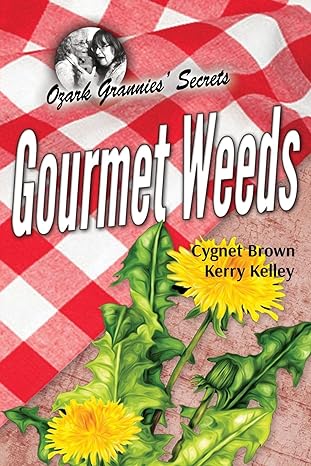
Gourmet Weeds by Cygnet Brown and Kerry Kelley

Purchase in paperback on Ingram Spark

Simply Vegetable Gardening

The Survival Garden

The Four Seasons Vegetable Garden

Help From Kelp

Using Diatomaceous Earth Around the House and Yard

Why Am I Doing This?

Chickens in winter
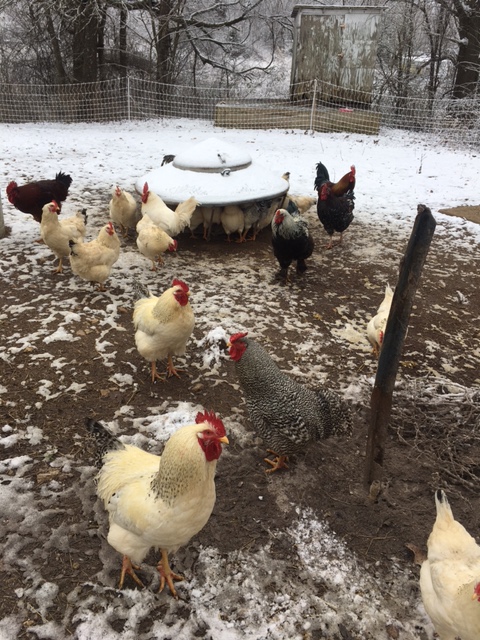
The chickens are making the most of their home this winter

During the past several years I have written several books about aspects of homesteading in my area. I have written about gardening, raising an orchard, raising chickens, and preserving what we bring to the table above what we can eat today. I have also explained how I have been preparing for the next several months or even the next year. I ensure I have everything I need to run my household and homestead.

I have been sharing a lot of my journey here on this blog, and I hope that it has been helpful to many. My goal in writing this blog has been to share my experiences with future generations.

I Began Teaching Gardening to My Kids

I started passing what I knew on to future generations through my children. I started this process by doing and allowing them to watch me while I gardened, canned, brought in firewood, and cared for the animals. Next, I had them help with the process, but soon each one hated it once the process was no longer novel and fun. They found other things to do to occupy their time. Each began doing what they liked to do, rather than what Mom wanted them to know. I finally had to allow them to move and find their own life path.  

For a long time, I thought that my children hadn’t heard me at all, but each of them had found their way of using what I taught them. They are also now asking questions about what I know about various aspects of all the things that I learned from my mother and she learned from her mother.  

Writing about Doing the Things

Writing about homesteading, gardening practices, and the area where I live is not so much about making a ton of money writing about this subject. The truth is, I desire to leave a legacy to the world. I want to share everything that I learned from bygone generation and share them with future generations.

I hope that the information that I share helps someone who wants to know more about living closer to nature. If that’s you, share something in the comments below. To tell you the truth, I sometimes am concerned that I’m wasting my time with this blog. If you are enjoying what I am sharing in this blog, I would love to hear what aspect of homesteading you like best and how I might better serve you.

As you know, this blog is free, but if you want to help yourself and me too, please purchase one of my homesteading-related books.

Gourmet Weeds

Gourmet Weeds by Cygnet Brown and Kerry Kelley

Gourmet Weeds in paperback

Simply Vegetable Gardening

The Survival Garden

The Four Seasons Vegetable Garden

Help From Kelp

Using Diatomaceous Earth Around the House and Yard
Beginning the Fall Garden Indoors Now

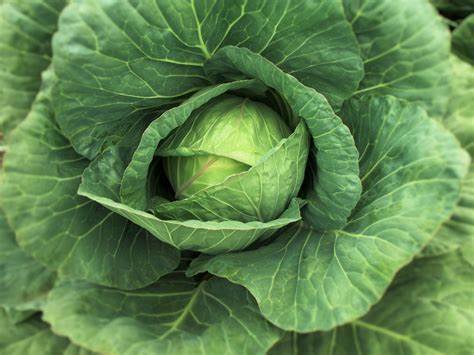
Cabbage likes cool weather and will keep a long time during the winter.

This year I have been doing what I can to get as much from a small garden space as possible. To tell you the truth, the reason is we are getting older and don’t have as much energy as we used to even just a few years ago. The old body doesn’t recover as fast as it used to and the summer heat is more draining than in past years.

That doesn’t mean that we can’t continue to have produce vegetables in our garden. We just must plan our days better and focus more on gardening during the spring and autumn months which is why we are planting a fall garden beginning in August and indoors.

Our Fall Garden Veggies

We had good luck this spring with broccoli and cabbage so we will be planting more of these cole crops this fall. We also want to include some other greens, carrots, turnips, and beets. The root plants and the greens I’ll plant directly in the garden in September. This week we’ll be starting the broccoli and cabbage.

Of course, where I live, the first of August is the time to plant however, the same might not be true where you live. Here’s the USDA chart for when to plant fall crops here in the US.  

USDA Growing ZoneAverage First FrostPlanting Cool Season Seeds
USDA Zone 4Sep 21 – Oct 7Jun 1 – Jul 15
USDA Zone 5Oct 7 – Oct 14Jun 15 – Jul 31
USDA Zone 6Oct 14 – Oct 21Jul 1 – Aug 7
USDA Zone 7Oct 21 – Oct 28Jul 7 – Aug 14
USDA Zone 8Oct 28 – Nov 7Jul 14 – Aug 21
USDA Zone 9Nov 7 – Nov 28Jul 21 – Aug 28
USDA Zone 10Late Dec – Early JanAug 21 – Sep 30

I live in USDA Zone 6B which is at the end of the planting cool season seeds planting time recommendations so this week will be good for us.

broccoli produces a head and once it’s cut the side shoots can be harvested even after a few light frosts.

In the spring I planted two broccoli plants. They were the Waltham 29 variety. It worked well for us in the spring garden. It produced a large central head and offered numerous side shoots over several weeks providing us with broccoli for several meals.

I also planted several types of cabbage. Two were oriental varieties Suzhou baby Boc Choy, Late Nagasaki, and the Premium Late Flat Dutch cabbage. Again, we had planted one large cabbage plant in the spring and several oriental plants. I also planted some Chinese White Celery. I am planting the broccoli and Dutch cabbage all at once and doing a succession planting of the oriental cabbage and some winter lettuce over the next three weeks.

I find that it works best to germinate these plants indoors. The summer heat can slow down germination and I am starting them indoors in an air-conditioned space. Once they have germinated, I will move them outdoors to a protected area and keep them until the plants are large enough to be put outdoors.

Planting the seeds indoors is an easy process. I started with one of the trays that I had used in the spring and filled it with a soil mix left over from when we planted the sweet potatoes.

Once the soil was in the planting tray, I then dampened the soil. The soil was ready for the seeds. I sowed two seeds ½ inch deep in the center of each section in the tray. I covered the seeds with soil and spritzed the top of the soil with water. Now that the plants were planted, I covered them with the plastic cover that came with the tray and put it in a cool room in the house. Until the plants germinate the plants can stay in a dark location, but once growth starts above the soil, I will remove the lid and move the plants outdoors so they can get sunlight. On extremely hot days, I can still bring the plants in from the heat.

If you’re interested in putting in a vegetable garden this year, I have written several books that can help you get started. All available on Amazon.

Gourmet Weeds

Gourmet Weeds by Cygnet Brown and Kerry Kelley

Paperback copy of Gourmet Weeds

Simply Vegetable Gardening

The Survival Garden

The Four Seasons Vegetable Garden

Help From Kelp

Having Backup

When I couldn’t afford to purchase plant pots, I made my own from newspaper and paper tape.

A couple of weeks ago on a Friday morning, a massive disruption occurred in the internet system. At its heart, was CrowdStrike, a cybersecurity firm that provides software to companies worldwide. The company says the problem occurred when it deployed a faulty update to computers running Microsoft Windows, noting that the issue behind the outage was not a security incident or cyberattack.

On Friday afternoon I heard a cybersecurity expert talking about how the companies could have avoided such a catastrophe by using not just one cybersecurity firm in their business—still, two unrelated cybersecurity firms to handle the company’s cybersecurity. Half of the company’s computer system is serviced by one cybersecurity firm while the other half is serviced by the other. This way, if there’s a glitch in one system, it doesn’t affect the entire company. The event didn’t affect my household at all. However, this interview did get me thinking.

Why are we dependent on a single system only to whine when that system inevitably fails we are unprepared? Why don’t we have backups in our homes for things we have become dependent upon in our lives.?

Alternate Utility Sources

Let’s start with our utilities. What would you do if the water in your home stopped running? It happens—a pipe bursts from frigid weather or equipment fails so the water no longer flows into your home. Do you have an alternate source of drinking water or water for bathing?  Perhaps you have some stored water in your home. Perhaps you have a stockpile of paper plates, plastic utensils, and maybe some tin foil to cook on so that you don’t have as many dishes to wash.

How about an alternative to electricity? We have a gas backup generator and some small solar appliances. There are solar versions of the gas generator for producing electricity and there are complete solar systems that can be purchased.  Those are expensive alternatives, but there are more affordable solutions. We could go deep into these aspects for alternatives now, but I don’t want to make this article all about electricity, I suggest that you examine the various ways that you use electricity and look for alternatives. For instance, what else can you use for lighting? Flashlights? Candles? Cheap outdoor solar lights that you can pick up for a couple of bucks each?

What utility do you use to heat or cool your house? To heat our home, we have a wood heating stove. If electricity is your heat source, what alternatives do you have available to you/

What sources can you use to cook meals? At my house, we have several ways to cook food in different situations. We have a propane outdoor grill, a smoker, a charcoal grill, and a butane camp stove, and we can also cook (and heat water) on our wood heating stove.

Alternative to a Grocery Store

It’s so easy to just go to the grocery store for anything that we want to eat or to go to Walmart to pick up personal care and house cleaning. However, what happens if that choice is no longer available? What can we do?

Again, it’s time to look at possible alternatives to going to the grocery store. In some situations, going to

When something’s unavailable from the usual source, look for other ways to obtain what you need to make a meal. In some cases, it may be possible to go to a restaurant to get a meal. In other circumstances, you may need to go to a food pantry.

Other places to get food could include going to farmers’ markets or visiting farms and helping with the harvest.  If you have the ability, it can also include growing fruits and vegetables, hunting, and fishing. Some of these ways take more skills than others, and having these skills is important to learn now before those skills are needed.

Personal Care and House Cleaning

Numerous alternatives exist in the areas of personal care and house cleaning. For instance, with the cost of bleach being so high, I have discovered that pool shock offers a less expensive alternative. Here’s a link to the article I wrote about it.

Baking soda also offers a fantastic alternative to things we use every day. For more details, check out my article.

Another common item, vinegar, is useful in personal care and house cleaning projects. Another alternative is replacing numerous household products with homemade soap and soap products. You can even take this a step further and make soap made from fat and lye.

There are so many more areas of our lives where we can find alternatives. Discovering what could remove what we want from life can be devastating, but knowing that we have found alternatives to those items helps us have happier, healthier, and more peaceful lives.

More alternatives can be found in my books.

If you’re interested in putting in a vegetable garden this year, I have written several books that can help you get started. All available on Amazon.

Gourmet Weeds

https://shop.ingramspark.com/b/084?Bdm3q5kcr0zYvywdeuStOBmX4q0IYJBlMCeUAPi5FNL

Simply Vegetable Gardening

The Survival Garden

The Four Seasons Vegetable Garden

Help From Kelp

Using Diatomaceous Earth Around the House and Yard

Putting Up Corn

Every year, we grow a lot of vegetables in our garden. Some of them we use straight from the garden like lettuce, broccoli, cabbage, radishes, and many herbs. Others we can pick fresh and store them for several months like potatoes, sweet potatoes, onions, garlic, and carrots. I usually can other vegetables by themselves or with other vegetables like tomatoes, peppers and green beans. Some vegetables we prefer to preserve in the frozen form.

Not Growing Corn this Year

For several years I grew corn (maize)  in the garden, but this year, we downsized the garden to the beds we were able to put within the fence and in our eight raised beds so corn was one of several vegetables that we didn’t grow this year.

That doesn’t mean that I was not able to get corn this year because I found another source. I purchased corn from one of the Amish at our local farmers’ market. I purchased the corn at the end of the market so that I was able to buy the corn at a reduced price.

The vendors at our farmers market often don’t have vegetables at the end of a market. However, if they do, other vendors will often purchase those vegetables at a discount which is what I did that day.

The Simplicity of Freezing Corn

We had some corn on the cob that evening, but the rest of it I put into the freezer. Freezing corn is the easiest way to preserve this vegetable.

The corn I purchased was still in its husks, so I had first to husk the corn ears. I learned this trick for easily removing the husks. Trim the stem end of the corn using a sharp knife. Cut enough that the stem is completely removed, and the husk is detached from the bottom of the cob, but not so much that you lose a lot of kernels.  

Once all the corn is shucked or in other words, husked, I then blanched the ears. I dropped them in boiling water to boil them for two minutes then removed them to cool in the sink. Many people would cool the corn in ice water. I usually leave them in the sink until they cool naturally.

Once the corncobs cooled, I cut the corn off the cob. It would be cool to have one of those corn-cutting tools, but I don’t, but a knife works perfectly fine. I use a cutting board as the cutting surface. The cutting board has a trough around the board’s outside edge so that the corn stays on the board. I hold the corn cob’s most level side against the cutting board. While holding the corn cob level end tight against the cutting board, I start cutting from the top. I cut the corn rows by pulling the knife from top to bottom.

Once I cut all the corn kernels from the cob, I then place the corn kernels in a plastic quart-sized freezer bag until I have enough corn to fill the bag. I mark the bag with “corn” and the date and then place the bag in the freezer.

Canning was an Alternative

It’s a great feeling to have another vegetable variety in the freezer. I could have canned the corn, but since we enjoy frozen corn so much more, we are glad that we decided to freeze it, but I could have canned it. It would have been a matter of preparing like I did for freezing, putting corn in prepared jars, covering the corn with boiling water, adding a little salt (teaspoon to a quart), cleaning the jar rims applying lids and rings to finger tightness. Pressure can 55 minutes for pints and 85 minutes for quarts.

Are you putting up corn (maize) this year? What method are you using?

My Gardening Related Books

If you’re interested in putting in a vegetable garden this year, I have written several books that can help you get started. All available on Amazon.

Gourmet Weeds

Gourmet Weeds by Cygnet Brown and Kerry Kelley

Purchase Gourmet Weeds Here

Simply Vegetable Gardening

The Survival Garden

The Four Seasons Vegetable Garden

Help From Kelp

Using Diatomaceous Earth Around the House and Yard
Achieving a Bumper Crop: Tomato and Potato Harvest | Organic Canning Method

Everyone has heard the joke about spending $200 to garden for a single tomato. That does happen. There’s a gardening learning curve that every gardener must go through.

The other day I was talking with an Amish man at our farmer’s market about my books and I said that I was sure that he knew everything that I had in one of my books, but he said that there are always things that he can learn about gardening. Wow, even the Amish admit that there are still things to learn.

Giving Up the Fight with Squash Borer

It’s true. Even though I am a seasoned gardener, whenever I start gardening in a new area there is always a learning curve and gardening challenges. For instance, I have had a difficult time growing anything in the cucumber/squash family. Japanese beetles, squash borers, and squash beetles have decimated this aspect of my garden for the past three years. This year, I decided not to plant any in the hopes that the year of not growing them might starve out the pests. I had one wild volunteer plant start growing in my compost pile and I was hopeful for a few weeds. However, it too soon gave up the ghost.

Tomatoes and Potatoes Did Well This Year

We had a bumper crop of potatoes this year and I have about a hundred pounds of them in my kitchen.  They’ll remain usable as long as the house remains air-conditioned. (Which the house will,  as long as we don’t have an extended power outage like they had in parts of Texas.)

We also have a good supply of tomatoes this year and that means I will be able to put up canned tomatoes. Most years I try to put up various sauces and salsas, but this year I plan to focus on plain canned tomatoes.

How to Can Tomatoes

Here are the basics of water bath canning.

  • Sterilize jars
  • Wash lids and rings
  • Wash tomatoes and cut out any bad spots
  • Heat water in a stock pot
  • Add tomatoes and allow the tomatoes to sit in boiling water for a few minutes until the skins crack.
  • Remove tomatoes from the boiling water and into a strainer and allow tomatoes to cool. You can hurry the cooling process by adding some ice to the strainer.
  • Once the tomatoes are cool enough to handle, begin removing the skins and stem ends of the tomatoes and placing the skinned tomatoes into the jars.
  • Fill the jars to 1 ½ to one inch of the top of the jar. Add one teaspoon (5 milliliters) per quart (liter) of tomatoes.
  • Wipe the rims of jars and place lid and ring onto the jar. (Using vinegar to wipe the rims is not necessary.
  • Tighten rings to finger tight.
  • Place jars of tomatoes into a water bath canner and cover with water with two inches of water above the jars. If you don’t have the canning rake, you can put towels at the bottom of the canner and place jars on top of the towel to keep the jars from bursting from the heat of the bottom of the canner).
  • Bring to a boil and allow to boil at a low boil for 15 minutes.
  • Remove jars of tomatoes with canning tongs and place them on dry towels in a location where you won’t have to move them for 24 hours.
  • After 24 hours, remove the rings from the jars, label and put them away.

Harvest time, pest prevention, and canning are all activities that many of us gardeners do every summer. Do you have comments or questions about any of these summertime activities? If so, please share your thoughts in the comments section below.

I hope this post was helpful. Would you like more information about gardening? Well, here are the books I have written related to this subject!

My Gardening-Related Books

Gourmet Weeds

Gourmet Weeds by Cygnet Brown and Kerry Kelley

Purchase a print copy of Gourmet Weeds directly on Ingram Spark

Simply Vegetable Gardening

The Survival Garden

The Four Seasons Vegetable Garden

Help From Kelp

Using Diatomaceous Earth Around the House and Yard

Fresh New Potato Dishes

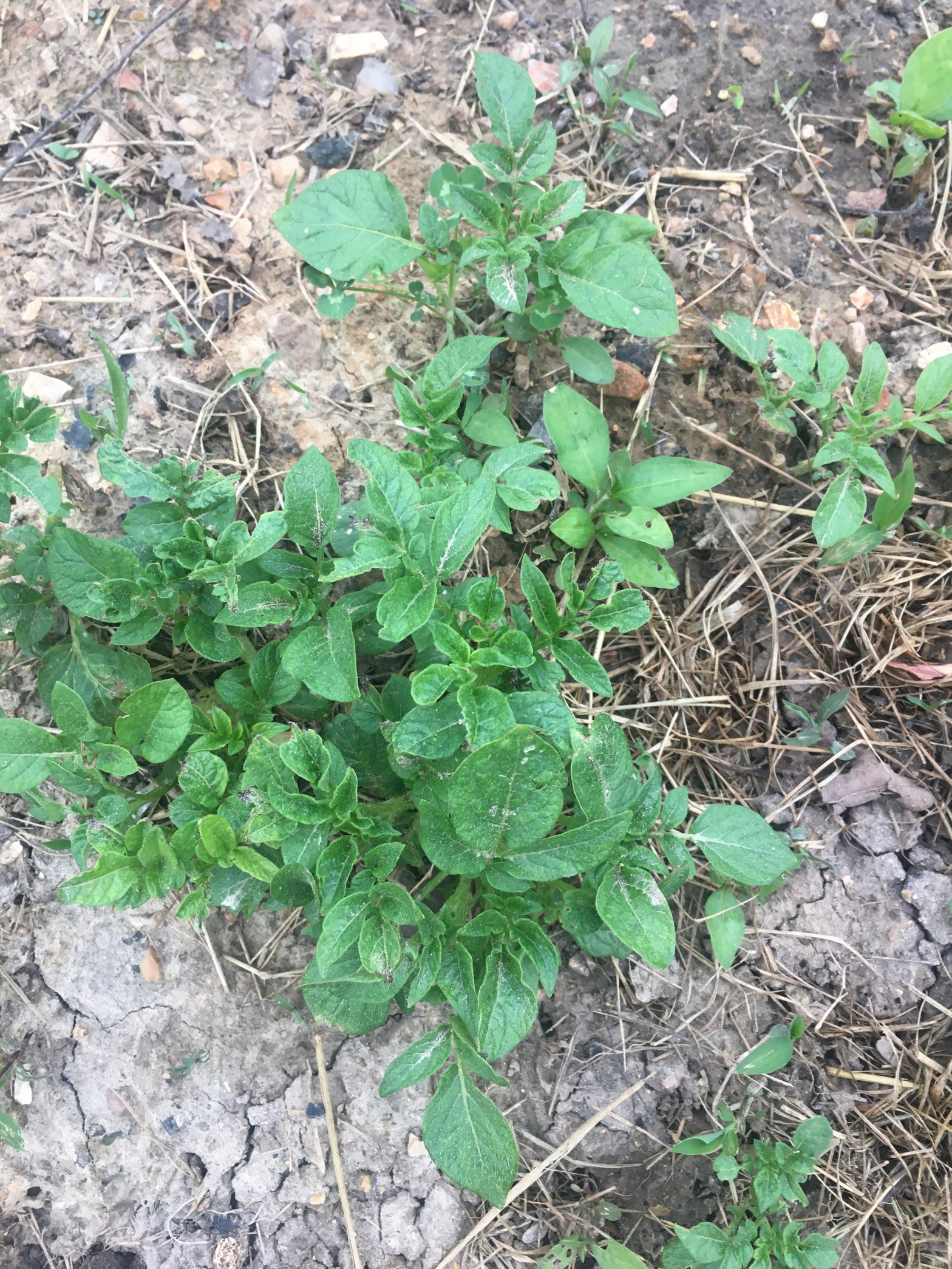
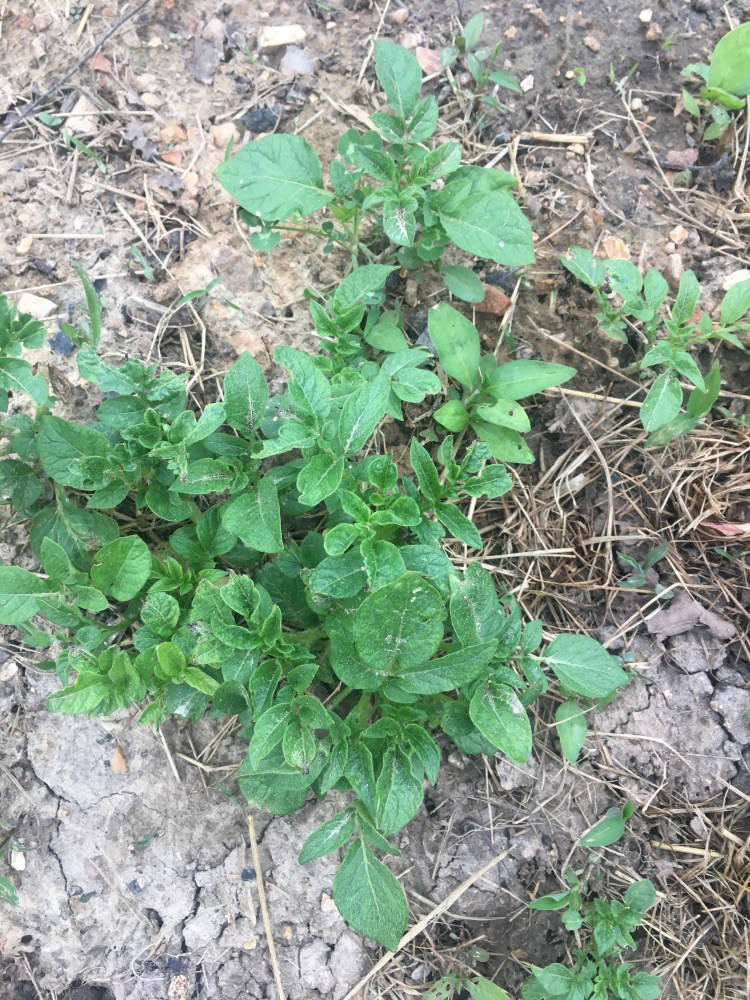
potato plants

If there’s one thing we have in abundance this year in our garden, it’s potatoes and nothing tastes better than potatoes freshly dug from the garden.

I don’t know if it’s the same throughout the world, but here in the Ozarks, we call freshly picked potatoes (especially the tiniest ones) are called new potatoes. These potatoes still have delicate skins eaten with flaky white centers.

One of our favorite ways to eat fresh new potatoes is to make green beans and new potatoes. The recipe is the first recipe in our previous article Enjoy Fresh Green Beans Every Week. Check it out if you haven’t already.

Another popular summer recipe using new potatoes that we love in our house is New Potato Salad. This recipe is made according to taste. Use a little or as much of any ingredient mentioned so there are no specific amounts of any one ingredient.

New Potato Salad

Ingredients

New potatoes with skins still intact and cut in bite-sized pieces

Diced Boiled eggs

Chopped onions

Chopped celery

Yellow mustard

Mayonnaise

Miracle Whip Salad Dressing

Celery salt

Salt and pepper

Paprika

Directions

Allow potatoes and eggs to cool before adding other ingredients. Mix all ingredients together and refrigerate for at least 1-2 hours before serving.

Another recipe that we enjoy for eating the new potatoes that we grow is Oven Fried New Potatoes

Oven-Fried Ranch New Potatoes

Ingredients

Uncooked new potatoes cut into bite-sized pieces

Olive oil

One package of ranch dressing mix

Directions

In a bowl, mix new potatoes and olive oil, and then add the package of ranch dressing. In a 350 degree Fahrenheit (177 degree Celsius) oven bake until potatoes are lightly brown and the inside each potato is soft. Serve hot.

Our final recipe in this list is one that I enjoy making for breakfast—New Potato Breakfast Skillet

New Potato Breakfast Skillet

Ingredients

Uncooked new potatoes cut into bite-sized pieces

Vegetable oil or bacon drippings

Minced onions

Minced green and/or hot peppers

Minced cooked ham, cooked sausage or cooked bacon (or a combination)

Lightly beaten eggs

Colby Jack Cheese or cheddar cheese

Salt and pepper

Paprika (optional)

Directions

Melt oil or bacon drippings in a deep frying pan or skillet. Add the uncooked new potatoes. Cook the potatoes on medium heat until they are about half done. Next, add onions and green or hot peppers and cook until onions are translucent. Now add ham, sausage, or bacon (or combination). Now add lightly beaten eggs and scramble them into the mix. Add Salt and pepper to taste, add your preferred cheese. Serve hot with salsa or sour cream if desired.

Enjoy Fresh Green Beans this Week

cooking ideas for fresh green beans
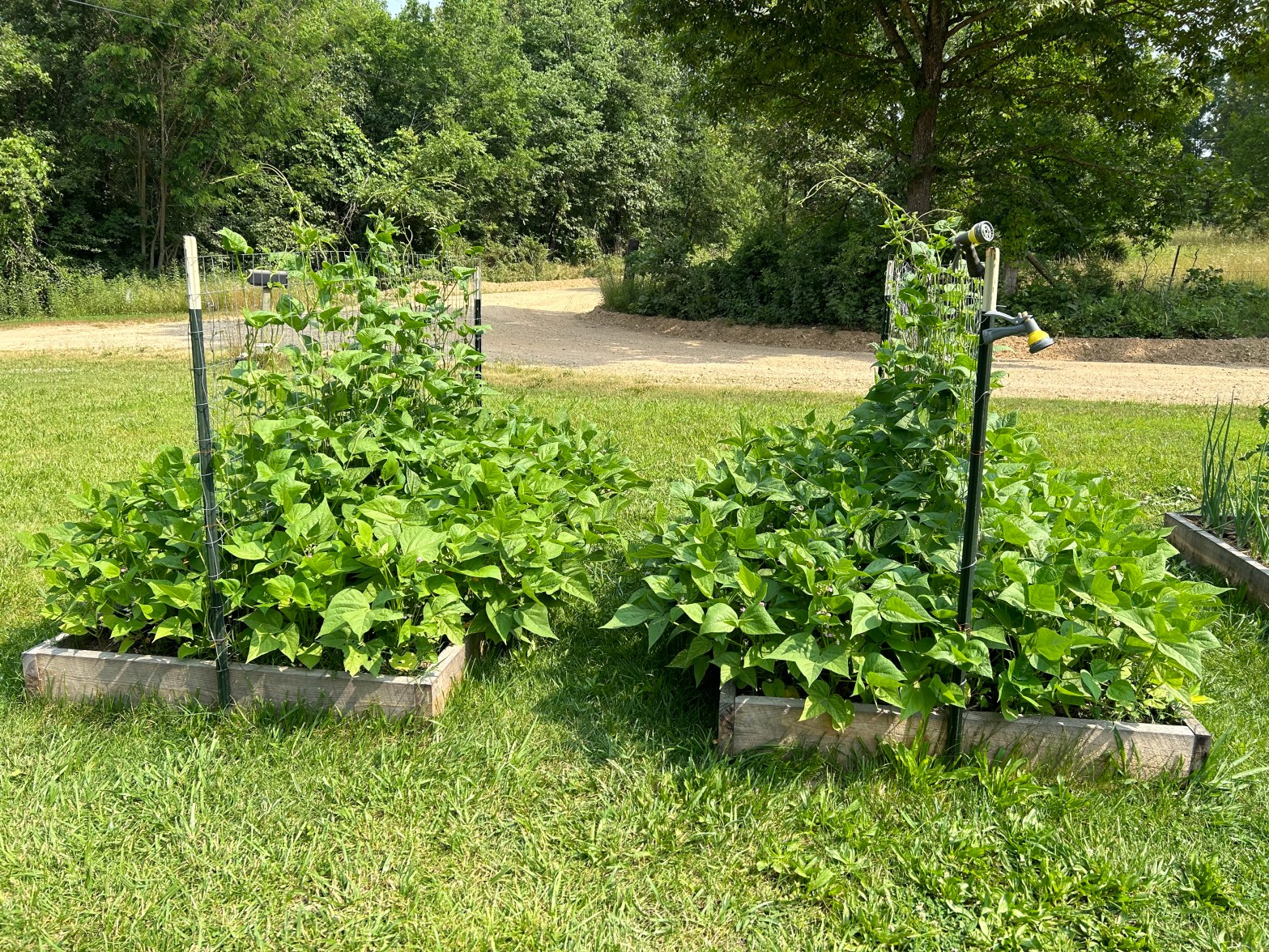
Two 4×8 foot beds of green beans will supply a year’s worth of snap beans!

Last year’s garden produced an overabundance of green beans
so I have a lot of green beans canned so I decided not to can green beans this
year. However, we do enjoy eating fresh green beans and there are people at the
farmers’ market who enjoy fresh green beans, so we decided to grow just enough
green beans to eat fresh and to share at the farmers’ market.


My husband loves fresh green beans and here are a couple of
his favorite recipes that we make every year with green beans


Last week, we had green beans and new potatoes. This is a
must cook item for every true Ozarkian (and those of us who have been adopted
in.


Green Beans and New Potatoes


Green beans and new potatoes are a dish that almost every
Ozark Granny has in her recipe box.


Ingredients

Cut green beans

Small fresh potatoes

Minced onions

Water or ham stock or water and ham bouillon

Bacon grease


Directions


To make green beans and new potatoes, begin by snapping your
beans and cutting or snapping them into 1-2 inch pieces. Now mince some onion
and cut up some small potatoes. We enjoy early red potatoes with the skins on
because we enjoy the contrast in color between the red potatoes and the green
beans. Once you have everything cut up, put the green beans in a saucepan and barely
cover with water. (for added flavor, you could use ham stock or bouillon). Now add
a dollop (about a tablespoon) of bacon grease to the pan of beans. Cover and cook
until the vegetables are done. Serve with your favorite meat. If that meat is
cooked over a charcoal fire, all the better.


Stir Fry Garlic Green Beans


This week we had stir-fried garlic green beans. If you like
the taste of the green beans served at Asian restaurants, you’ll love this home
version of this dish.


Ingredients


Sesame oil


Whole and tender green beans


Minced garlic


Chopped ginger root or ginger powder


Soy or teriyaki sauce


Garlic powder


Salt and pepper


Directions


Prep your beans by washing and removing the blossom end of
the beans. Heat sesame oil in a wok or frying pan at medium-high heat. Mince
the garlic and add to the hot oil. Quickly add the green beans and chopped
ginger or ginger powder.


Can also be served with beef or chicken added. Just cook the
beef or chicken before adding the beans to the sesame oil.


Serve with rice.


The Best Way I’ve Found to Cook Rice


This started as an experiment, but now I do this all of the
time.


Ingredients


1 Tablespoon butter, vegetable, or olive oil


1 cup of long-grain rice


2 cups Meat (beef, chicken, or turkey) or vegetable stock


In a saucepan, melt butter. Add rice and lightly toast the
rice. Now add the stock and bring to boil. Cover the pan and reduce to low-medium
heat. Cook until the rice is done.

My Gardening Related Books

If you’re interested in putting in a vegetable garden this year, I have written several books that can help you get started. All available on Amazon.

Gourmet Weeds

Gourmet Weeds by Cygnet Brown and Kerry Kelley

https://shop.ingramspark.com/b/084?Bdm3q5kcr0zYvywdeuStOBmX4q0IYJBlMCeUAPi5FNL

Simply Vegetable Gardening

The Survival Garden

The Four Seasons Vegetable Garden

Help From Kelp

Using Diatomaceous Earth Around the House and Yard

https://www.amazon.com/Using-Diatomaceous-Earth-Around-House/dp/1329798775/?_encoding=UTF8&pd_rd_w=Nrcr1&content-id=amzn1.sym.cf86ec3a-68a6-43e9-8115-04171136930a&pf_rd_p=cf86ec3a-68a6-43e9-8115-04171136930a&pf_rd_r=146-8914817-1931602&pd_rd_wg=lPPWg&pd_rd_r=623a17aa-c969-4f8c-ab04-84c3050f6817&ref_=aufs_ap_sc_dsk

Three Survival Garden Vegetables, This Week’s Garden Focus

Three of the vegetables I have included in The Survival Garden, Plant a Garden to Last All Winter that Doesn’t need to be Canned Frozen, or Dehydrated are garlic, potatoes and sweet potatoes. These the focus of this week’s homesteading project.

Garlic

The garlic is now dry enough to store. I took the garlic that was damaged and prepped it for drying into garlic powder. Here’s how I did it!

The Potato Harvest

This past week, we finished harvesting our fabric bags of potatoes. We have eaten some but have about 50 pounds of Norland potatoes ready to eat during the summer. We have more potatoes growing in the ground, but those aren’t ready to harvest yet. This is fine. This will help stretch out the potato harvest, so it lasts longer.

After we harvested the potatoes, I immediately put the soil back into the bags and planted sweet potato slips. This gives us a second harvest of calorie and nutrient-dense food that should take us through most of the year.

Sweet Potatoes

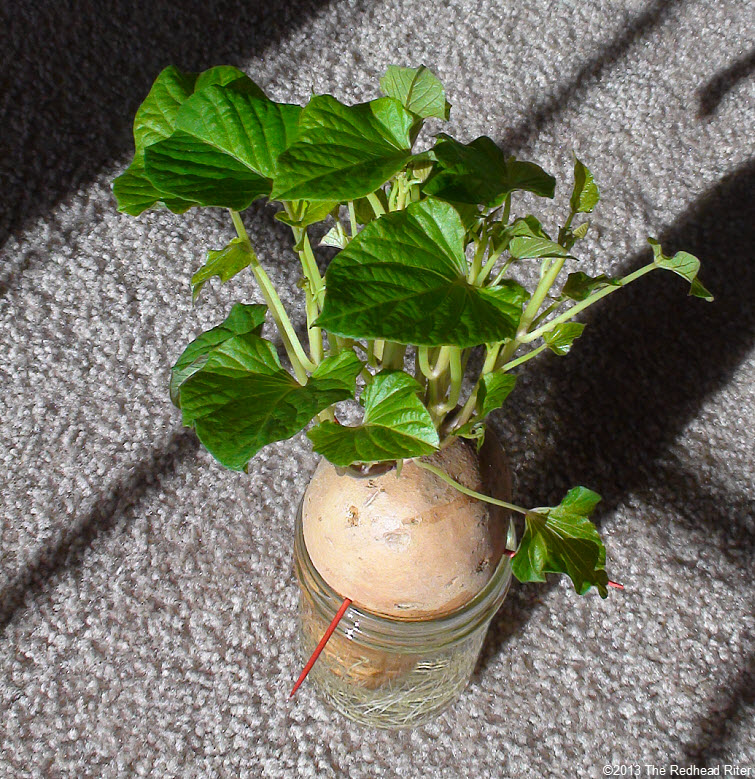
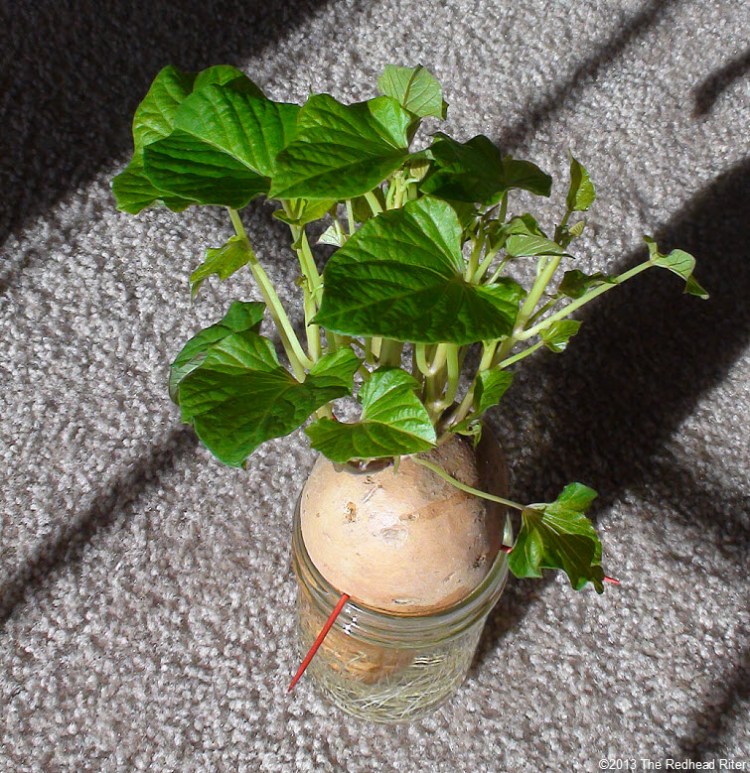
A week ago on Saturday, I bought 20 sweet potato slips for 10 cents per sweet potato slip which was a steal! I put them in two jars of water to soak until I was able to plant them. Before I planted them, they were already beginning to develop roots.

 The soil was left over from the potatoes I grew in the fabric pots so these sweet potatoes were practically free to get into the soil.

I planted the sweet potato slips in the cool of the evening. To plant the potato slips, I simply scooped the soil out of the center of the bag. I laid the slip along the soil and covered the soil back over it. I kept the sweet potato plant leaves above the ground but covered as much of the stem as possible. I am now watering the sweet potatoes twice per day until the plants are well established.

Other Harvests This Week

We’re harvesting other foods as well. I harvested more broccoli from the two broccoli plants. It amazes me how much each of these plants is producing as long as I am harvesting them regularly.

I harvested more hot peppers this week and took them to the farmers’ market because I don’t have a use for them right now. This is a better decision than putting them in the refrigerator until I do have a use for them. Plus, because I harvested them, more will be growing over the next few months and I’ll have plenty of hot peppers when I am ready to use them with the tomatoes which are still not ready to pick.

For more about how to grow more food that doesn’t require a lot of preparation to store purchase The Survival Garden.

The Survival Garden

My Garden Supermarket

This week has been a week where we have been harvesting a lot of food from the garden. I haven’t been canning, freezing or dehydrating anything that I am harvesting right now. Some of it will keep without refrigeration and others we are eating as soon as we pick it from the garden.

Why Not Can, Freeze or Dehydrate?

My mother used to do a lot of canning and freezing, but often she didn’t cook the food she grew immediately. Instead, she put it up so that she could brag about how much she had canned or frozen. Often she would say, “You’ll be glad this winter that we have this.” Often, however, the food that she froze or canned didn’t get eaten at all. Too often, the food in the freezer would get freezer-burned and had to be given to the livestock or thrown into the compost pile.

My dad often commented on this flaw in her thinking and suggested that we should eat the vegetables when they were fresh rather than let them waste away on the shelf or in the freezer. I try to take this advice and utilize as many fresh homegrown vegetables in my diet as possible.

Right now we have a variety of vegetables that we are using. Here’s what we had coming from our garden that we have used this week.

Potatoes

We have two different crops of potatoes growing. Some are growing in fabric bags and others we planted in the ground. The ones growing in the ground are still growing, but we’re harvesting the early red Norlands grown in the bags. We are harvesting two to three bags every day and eat them with other vegetables. These potatoes are early varieties that don’t store long term so we either need to use them if possible. If we can’t eat all of them, I will need to either can them, freeze them, or dehydrate them for long-term storage.

Garlic Scapes

We grow hardneck garlic which provides us with scapes every year. Scapes are the flower stalks of the garlic and they come out a few weeks before the garlic harvest. I have learned to use these scapes in cooking. They add a mild garlic flavor in stir-fries and other cooked garlic dishes. I love sprinkling chopped garlic scapes on casseroles. They are a great addition to scalloped potatoes.

Scapes will keep in the refrigerator for a week or so. I did put some in the freezer to save for later. Freezing them is as easy as chopping them and throwing the chopped scapes into a freezer bag or container.

Garlic

We harvested our garlic this past week. The garlic takes a while to prepare to keep throughout the winter. I pulled it from the garden and laid it out on a tarp in the sun and rain until the leaves were dried and then cut the bulbs. I then cut the roots from the bulbs and cleaned off the majority of the dirt from the bulbs. I then laid the garlic in a single layer to dry. Some of the garlic that has been nicked or otherwise damaged, I will use immediately or I’ll dry to make garlic powder, but most of it I’ll use fresh in cooking or when canning tomato products.

Cabbage

We have a cabbage that we have harvested this spring and We’ve used it cooked in a couple of meals already. I still need to use some of it to make cole slaw. Because there is only two of us, the cabbage goes a long way. We’ll be growing more this fall.

Chinese Cabbage

We grew too much of this all at once and ended up not being able to use it up all. We had one meal of it, and it seemed bitter. We gave most of it to the chickens. We will try growing some more later in the fall.

Lettuce

Our head lettuce came on all at once and we couldn’t use all of it before it turned to mush. What I did have, I enjoyed. I will plant more in the fall, but I will try to stagger the harvest more.

Broccoli

We had two plants from which we harvested the main harvest a couple of weeks ago. Since then, I have been harvesting side shoots. I’ll be making a quiche with these this week.

Again, I intend to plant more of this brassica this fall.

Hot Peppers

We’ve picked a couple of ready hot peppers already so we have used them to season several dishes especially Mexican dishes. There’s more of these to come.

Not All Are Ready to Harvest

As you can see, we have a variety of vegetables coming from the garden already, and even more to come.

Tomatoes, green beans, sweet peppers, and sweet potatoes are still on the horizon. We’ll eat as many of these fresh as well. There’s nothing like fresh ready to eat vegetables from your own backyard garden.

Are you putting in a vegetable garden this year? I have written several books that can help you get started. All are available on Amazon.

Gourmet Weeds

Gourmet Weeds by Cygnet Brown and Kerry Kelley

https://shop.ingramspark.com/b/084?Bdm3q5kcr0zYvywdeuStOBmX4q0IYJBlMCeUAPi5FNL

Simply Vegetable Gardening

The Survival Garden

The Four Seasons Vegetable Garden

Help From Kelp

Using Diatomaceous Earth Around the House and Yard
https://www.amazon.com/Using-Diatomaceous-Earth-Around-House/dp/1329798775/?_encoding=UTF8&pd_rd_w=Nrcr1&content-id=amzn1.sym.cf86ec3a-68a6-43e9-8115-04171136930a&pf_rd_p=cf86ec3a-68a6-43e9-8115-04171136930a&pf_rd_r=146-8914817-1931602&pd_rd_wg=lPPWg&pd_rd_r=623a17aa-c969-4f8c-ab04-84c3050f6817&ref_=aufs_ap_sc_dsk