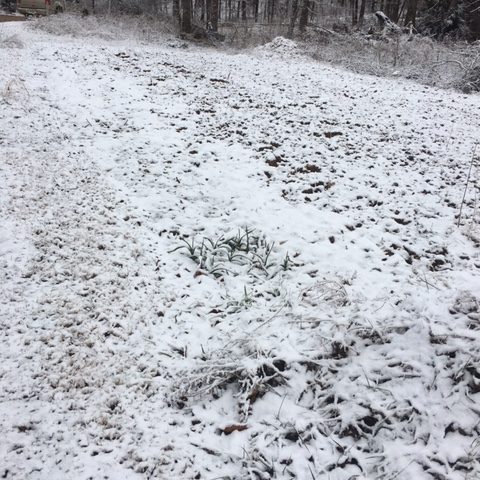
How Prepared Were We For Our Most Recent Cold Weather?

winter time garden

Often the best time to evaluate what we need to do to prepare for cold weather occurs after we have just gone through a bout of bitter-cold winter weather. So today, I am going over what we did, how it worked, and what we’d like to do to improve our ability to beat the cold.

During the past two weeks, we have had the coldest weather that we have had all season. We have an extreme cold almost every winter. Last year it was in December, but this year, January has seen the polar vortex swoop down from the Arctic to bring sub-zero temperatures down here to the Ozarks.

Cold weather like we have been experiencing this year can cause numerous issues that make life difficult.

Frozen Pipes

Frozen pipes can cause severe damage to our plumbing system. When water freezes in the pipes, it expands and can cause them to burst, resulting in costly repairs and water damage. It is essential to take preventive measures to avoid frozen pipes during cold weather by insulating them properly and keeping a steady flow of water through them.

For the past four winter seasons, we have consistently had the water pipes freeze every year and it stays frozen for 1-10 days. Fortunately, we use rural water rather than having a well. We also installed a frost-free hydrant out by our water meter, so we’ve always had access to water from there even though the water is frozen in the house. Daily, we bring in water from the hydrant and flush the toilet, do dishes, and provide drinking water for our cats, chickens, and ourselves.

Every year we have had to replace pipes that burst during the extreme cold. My husband and I have been discussing what we need to do to avoid frozen pipes in future years.

We know that increasing the insulation under our trailer along with adding skirting will help with this problem. We have also talked about adding heat tape along the pipes. The heat tape probably doesn’t need to be placed along the whole length of the pipes either. I think it would be best to wrap a length around certain junctures along the pipe. For instance, we could place the heat tape where the pipe comes out of the soil at the back of the house and around the elbow where the hot and cold water pipes turn toward the kitchen sink at the front of the house.

Keeping water in front of our chickens is another challenge during extremely cold weather. Right now, I am taking hot water out to their pen and pouring the water into pans rather than their watering containers because if the watering containers freeze they are likely to break. I could purchase a water heater for the watering containers, but I haven’t done so, at least, not yet.

No Electricity

It didn’t happen this winter, but some years ice caused electricity to go out. Since I first moved here, we have experienced two seasons when electricity went out during ice storms. The first time was for about a week and the second was for ten days. We managed fine because we had flashlights and a wood stove. We put our refrigerator food in a cooler out in the yard to keep it cold.

For years, we used the wood stove to heat the house, and when the electricity is out we use it for heating water and cooking food. This is an option if this happens again this year. In addition, we also have a butane cook stove and an outdoor propane grill to use for cooking if need be.

We didn’t have a generator back when the electricity had gone out in the past, but we do now, and we plan to use it if we are faced with similar situations. We just haven’t been put to that test since we got the generator. We make sure we have fresh gas any time there’s a threat of the electricity going out. We’ve also been talking about getting some deep-cell batteries to store electricity. Once we have those, we will also look at getting a solar setup as well.

This past Christmas I bought my husband a rechargeable battery charger and a weather radio to get local weather if the electricity goes out. The radio also has its charging abilities and a couple of ways to get light.

Heating our Home

Three years ago, when we got our trailer, we bought an outdoor wood stove because we thought the benefits might outweigh the problems. We decided that we didn’t like the outdoor wood stove, so we decided to put in an indoor wood stove. The indoor wood stove made it easier to load because we didn’t need to lift heavy blocks into the firebox instead, we could use smaller ones.

In addition, we found that we needed less wood to keep the house warm. We have already used a third less wood than we had previously, and it looks like by the end of winter, we may reach as much as half the wood. If that’s the case, the indoor wood stove may pay for itself in less than two years.

We have other ways to heat the house as well. If we need them, we have a buddy heater and an extra electric heater.

Different Options

In various areas of the country, there may be other options that I don’t have or the options that I do use for battling the cold might not work. Whatever your situation, it’s a good idea to look over the possibilities so that I’m not left in the cold.

Are you looking for something to do when winter storms bring bitter cold and keeps you indoors? Check out one of my gardening books!

Simply Vegetable Gardening

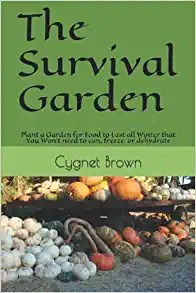
The Survival Garden

The Four Seasons Vegetable Garden

Help From Kelp

Using Diatomaceous Earth Around the House and Yard
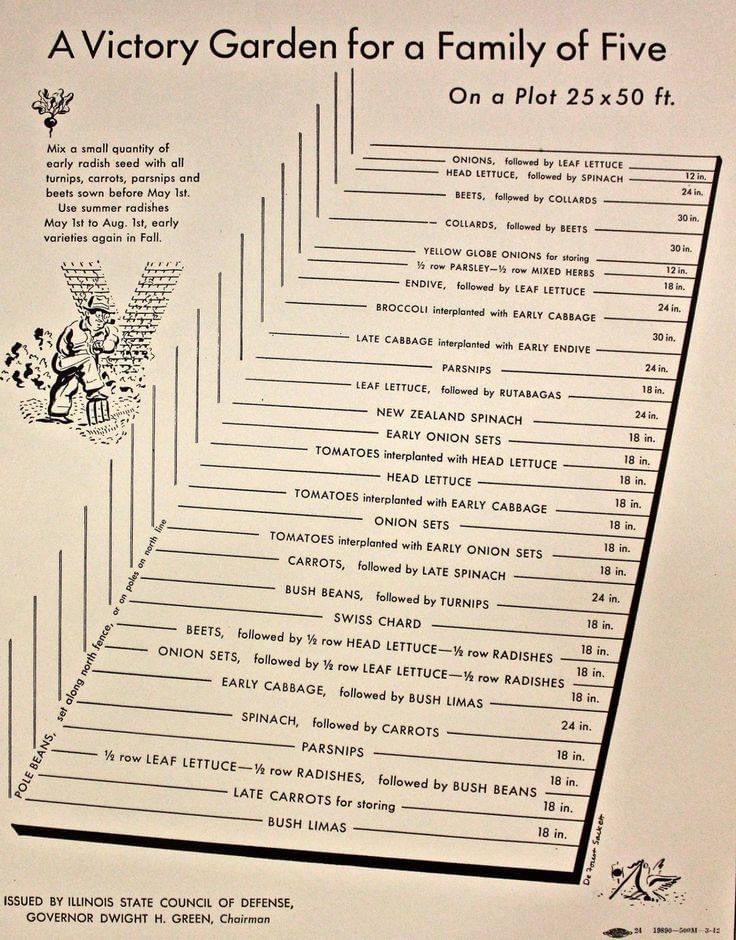
Get a Victory by Growing a Garden

Back during World War II, both the United States and Great Britain began what they called Victory Gardens. Great Britain had started the idea when the Axis powers began their quest to take over Europe during the late 1930s and early 1940s. As the Nazis rolled over their neighboring countries and swallowed up agricultural land in its wake. To feed the people on the British Isles, people there had to grow their own food not only to feed their people but also to feed their military men on the ground and in the air.

When the United States joined in the fight after declaring war on the Axis powers and joined the allies in the battle, they too joined the fight to feed their population and the populations of those who fought with them. Victory Gardens were not only a means to help feed people but also served as a means that they could feel as though they were helping the war effort.

Every State in the United States had a recommendation for what to have in vegetable gardens based on that State’s climate, nutritional, and caloric needs.

Victory Over Increase Military Tensions

Today, we have seen the escalation of “wars and rumors of wars” with the potential increased tension in the conflict between Ukraine and Russia and the powder keg that is igniting in the Middle East. The potential for the conflicts to spread to other lands, more otherwise fertile farmland may be bombed and rendered useless like the wheat fields of Ukraine. Therefore, it would be wise for anyone who has any space to grow a garden at all, to consider growing as much of our own food as possible.

However, even if these conflicts don’t spread, there are still victories to be won with our backyard gardens.

Victory Over Supply Chain Disruptions

As we saw beginning in 2020, supply chain issues can leave grocery shelves bare, and having a garden can help combat this issue. If we grow it at home, we don’t have to worry about not having food in stock. Instead of going to the grocery store, we can head to our backyard and find something for the next meal.

Over the past few years, we have seen breaks in our supply chain and many times there have been empty shelves in our grocery stores because trucks have not been able to get food to the areas where food is needed. If we grow our own gardens, we will help alleviate some of that burden.

Victory Over Poor Quality Vegetables

In addition, the quality of food that we get shipped into our grocery stores is not as fresh nor is it of high nutritional value. Taste is also compromised in vegetables from the grocery store. Anyone who has grown their own tomatoes can tell you that there is no comparison between store-bought hot house tomatoes and a tomato freshly picked from a home garden.

Victory Over the Cost of Groceries

The cost of food has risen 50% or more in some areas on many items during the past year or so. Gardening offers a more ready source of vegetables at a lower cost. Part of the reason has to do with the cost of transportation, which is understandable.

However, other reasons are more nefarious.  Often supplies know that they can raise the prices because of the fear that many people have about there not being enough to go around, so they raise the prices because they know that people will pay whatever they have to for food which is a necessity.

Victory Over Tainted Vegetables

Getting food from our gardens isn’t only about quantity, but about quality as well. Food safety has also come under fire in recent years. Have you seen the number of vegetables that were recalled in 2023? There were more than I care to count.

Victory Over Poor Health

Not only does having a garden provide nutritious food, but tending the garden is good exercise. The stretching, walking, and lifting we do when gardening helps us maintain a firmer, toned body.

Time in the garden also offers us the ability to get fresh air as well as time in the sun helps us create our own vitamin D.

Victory Over Damaging Our Planet

Not only is gardening better for the gardener, but gardening is also beneficial to the planet. Vegetables grown in a home garden are a source of vegetables that have a lower carbon footprint than food that travels thousands of miles before it reaches our dinner plates.

Victory Over Dependence on Agribusiness

A huge percentage of our food is grown by huge conglomerate agricultural enterprises that take advantage of government handouts through government subsidies that are not available to smaller farm businesses.

Where I live, small farms that utilize the farmers’ market for direct sales are relatively few and far between because few members of the younger generation are getting into farming because of the cost of doing business. Even our local farmers’ market is struggling to find enterprises that are willing to participate in farmers’ market enterprises. State governments who seem to be trying to control the quality of food coming into farmer’s markets are making it more difficult for small farming businesses to grow.

The government doesn’t have control of what we grow for our own families, at least not yet. We can grow our gardens using compost and manures that were produced on our own land rather than depend on commercial fertilizers that mine the soil rather than feed it. We can utilize our yard wastes and household garbage to grow vegetables that have a higher nutritional value than any grown in huge commercial agricultural enterprises.

Your Mission Should You Choose to Accept It

Therefore, your mission, if you choose to accept it is to create a victory garden in whatever garden space you can find. Whether it’s in your backyard, front yard, a friend’s yard, your window sill, under grow lights in a closet, or wherever you imagine. The benefits are there for the taking.

Books by Cygnet Brown

If you’re interested in putting in a vegetable garden this year, I have written several books that can help you get started. All are available on Amazon.

Simply Vegetable Gardening

The Survival Garden

The Four Seasons Vegetable Garden

Help From Kelp

Using Diatomaceous Earth Around the House and Yard
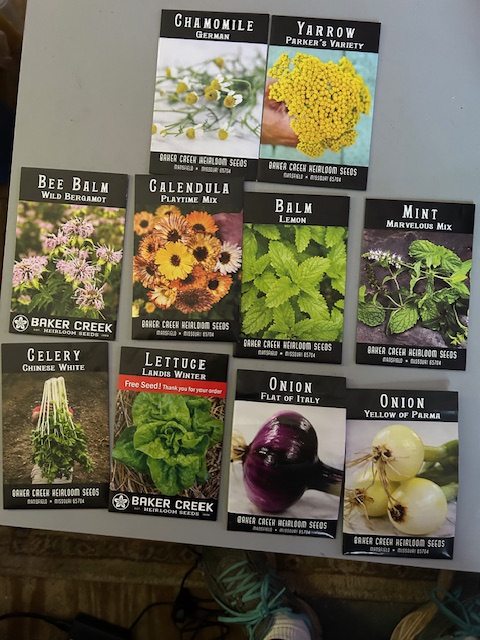
Earliest Seed Starting for Home Garden

I shouldn’t plant tomatoes now, but I should plant these in January.

Most of the plants that I tend to plant, I tend to plant too early. For instance, I have tried to plant tomato plants in January and it was not pretty. However, I have since learned that there are seeds that I can plant now that will give me a chance to scratch the itch of getting started with my next season’s garden now in January.

Here are a few of them that I am planting this month. These plants I can plant early and get a jump on the season by planting 8-12 weeks before planting out. And I can plant them outdoors about two weeks before the last frost date.

Onions The first item on my list is onions. We use a lot of onions at our house so I planted them earlier this week. We could buy onions as plants or sets, and we have done this many times in the past. However, this year, I have chosen to plant my onions as seeds. It’s economical. I get over three hundred seeds for about three dollars or about a penny per seed. It also offers me a way of knowing that the onions that I am growing are the right ones for my garden.

Because I like to plant heirlooms, I bought my seeds from a nearby seed catalog store that caters to heirloom seeds.

This week I started the onions by planting them a quarter of an inch deep in damp soil to which I added kelp meal to add nutritional value. The container that I use has 72 seeding pots into which I plant several seeds a quarter of an inch deep. I plan to leave four plants per pot. I watered them lightly and covered them with a plastic lid so that the seeds would stay moist until they germinated.

I intend to remove excess seedlings once they have germinated. The reason I leave four plants per container is that I learned several years ago that I can plant four plants in a pot and as they grow they will grow out in four different directions and this will save me from having to plant them one at a time and can just plant the whole pot without disturbing the onions.

Celery This year I am planting celery for the first time. Like onions, they are slow to develop, and I hope to be able to harvest them before the summer heat affects them. The variety that I am growing is also heat tolerant and doesn’t need to be blanched.

Because I don’t need as many celery plants as I do onions, I will plant about a dozen in a flowerpot. I doubt that I will be able to use enough celery to warrant planting more than that in the spring. I might, however, plant a second, perhaps larger crop of celery for a fall crop. I plant the seeds one-eighth an inch deep, water in, and cover the same as I did with the onions.

Winter Lettuce I received a free package of winter lettuce this year, so I have decided that I will start some early indoors and then plant some outdoors when conditions are right and then may plant them again in the autumn so I can grow lettuce well into the winter months. I will also be planting other greens later, but for now, I will start a few of these hardy lettuce seeds.

To grow this lettuce, I will plant it in a flower pot, one-quarter inch deep, and include about ten seeds. I will again water the seeds and cover them with plastic until the plants germinate.

Frost-hardy herbs Next, I intend to plant frost-hardy herbs for my herb garden. Because they each take a different length of time to germinate, I am also planting each herb in its own pot. In this group of herbs, I include Calendula, Lemon Balm, a mint mixture, German Chamomile, Yarrow, and Bee Balm. For each one of these, I will plant a single variety in a flowerpot. All the herb seeds will be surface planted except for the calendula which will be planted a quarter of an inch deep. Again, I will cover the pots with plastic to help conserve moisture.

There you have it, the plants that I can plant from seed as early as January. The best part about all this is not only will you be able to get a crop to harvest earlier in the season and pay less than you would if you had to buy the plants, but you will also be able to get these plants out of the grow room or greenhouse and into the garden so that you will have room later to plant your tomatoes and other sun-loving plants.

For more information about gardening, check out my book Simply Vegetable Gardening!

Order Yours Today

My First Attempt at Tomato Pie

Until this summer, I had never heard of a tomato pie, but then I heard about it from three different sources. It is apparently a popular summer southern dish.

Since we have a big crop of tomatoes this year, I decided to give tomato pie a try. It is a savory dish and not a dessert so I figured it would make a good main dish or even a side dish. We decided we would eat ours with meatball subs.

How to Make a Tomato Pie

Start with a single crust. The crust may be a regular pie crust, but a good crust can be biscuit dough rolled out very thin.

Slice ripe tomatoes thin and put them on paper towels or something for them to drain on for a minimum of two hours. Once the tomatoes are properly drained, heat the oven to 350 degrees F. Bake crust until about 50% baked remove from oven. In a pie crust layer drained tomato slices on the bottom of the crust (one layer deep). Next, put a layer of thinly sliced onion seasoning, salt, black pepper, and other seasonings you might like. like basil or so forth. I used a dried Italian seasoning mix. Make 3 layers after 3 layers take 3/4 cup of mayonnaise and stir in a cup of grated cheese of your choice. Spread this over the top of the entire pie. Cover the top with thin slices of ripe tomatoes. Bake in a 350-degree oven, bake until the top is slightly browned. This usually takes about 40 minutes.

How was it?

My husband and I enjoyed the pie. It had a rich flavor and reminded me of pizza. There was plenty left over so we stored the leftovers in the refrigerator. Like pizza, it was good the next day as well. We just nuked it in the microwave for about a minute to take the chill off a slice and ate it at lunch the next day.

I definitely recommend trying tomato pie. A great way to use fresh summer tomatoes!

More Information about Tomatoes

Growing your own tomatoes can be fun. Here are other articles I have written about tomatoes that I have grown.

Canning Filled Month

Our Tomatoes and Peppers in Raised Beds

Healthy Tomato Plants from Seeds

Making Garlic Powder

Garlic powder is used in many different cuisines. I use it in many dishes like spaghetti, pizza, goulash, soups, and stews as well as garlic toast to name a few. Because I had the garlic and often use garlic powder, I decided to make my own.

Every year since 2019, I have been growing garlic. I started with two bulbs and now have more than enough to last us an entire year, sell at the local farmers’ market, and have some left to replant. This year, rather than depending on fresh garlic for the entire year, I have decided to make my own garlic powder.

There’s no way that I believe that making garlic powder from scratch is going to save me a lot of money. The time it takes to turn garlic into powder wouldn’t pay even a minimum wage. I do it as a hobby, but I am also doing it so that I know that I know how to do it and so that I can share the process with others.

I feel that learning skills that people used to do are important for the future because it would be a shame if our descendants had no idea how to do valuable skills like this. You never know what the future has in store for us.

Pulling the Garlic from the Garlic Bed

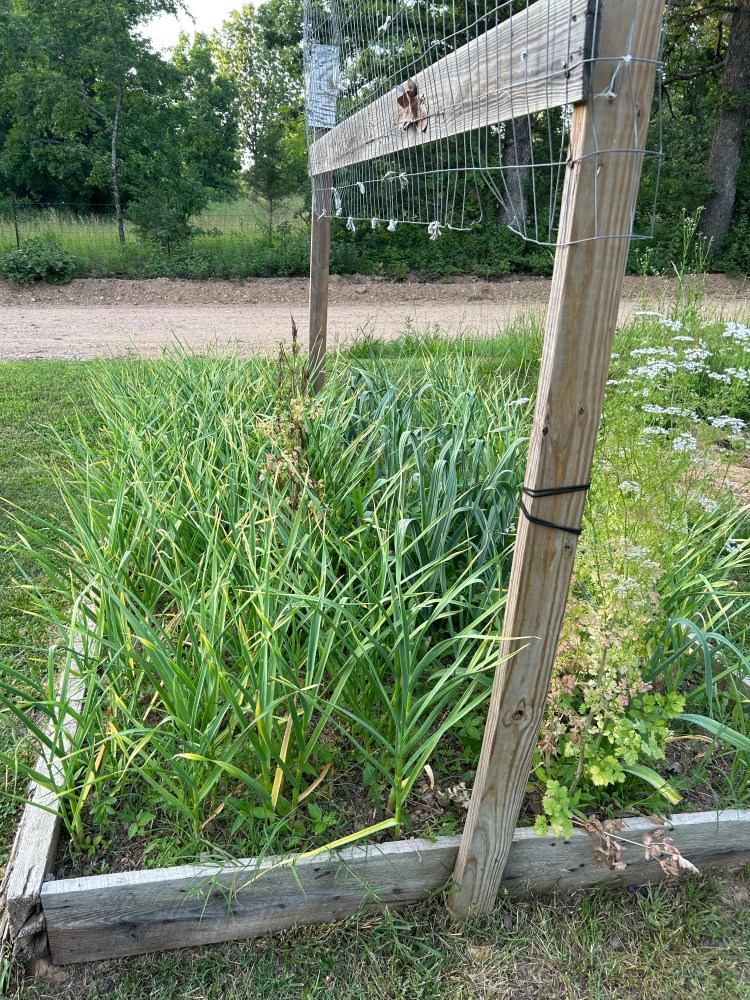
To begin the process, I pulled up the garlic and laid the plants out to dry until the leaves were brown. I made sure that the garlic didn’t get rained on and I turned the drying plants regularly so that no mold grew in areas that still contained moisture. After the leaves were completely dry, I cut the garlic bulbs from the plant at the neck of the garlic plant about two inches above the top of the bulb. I laid the bulbs out in a clean dry location to dry for a couple days longer.

Where the garlic had been growing in the garden, I reconditioned the soil with compost and planted sweet potato slips in their place. I then covered the soil there with mulch and kept the soil moist.  

Cleaning the Garlic to Make Powder

Once the outside of the garlic bulb and the cloves were relatively dried, I separated the individual garlic cloves within the bulb. I then removed any part of the garlic clove that isn’t edible. This process was quite tedious and took me two afternoons to complete. This took longer than the drying process would.

Mincing the Garlic

The morning after I cleaned all the cloves, I minced all the garlic in my food processor. I minced the garlic before I dried it for two reasons. First was because the garlic would dry more quickly if it were in smaller pieces. The second reason was that the garlic would be easier to powder once it was dried.

Drying the Garlic

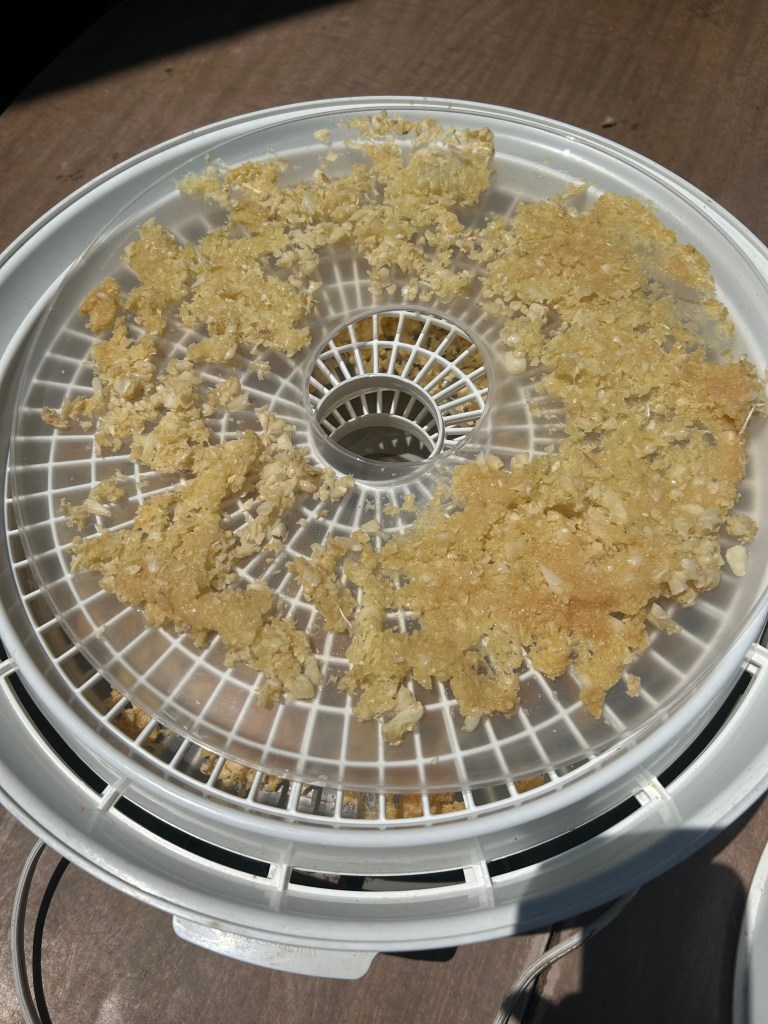
Once the garlic was minced, I  poured the garlic into my dehydrator to dry. I put the minced garlic in thin layers on the dryer sheets so that the garlic would dry quickly.

Powdering the Garlic

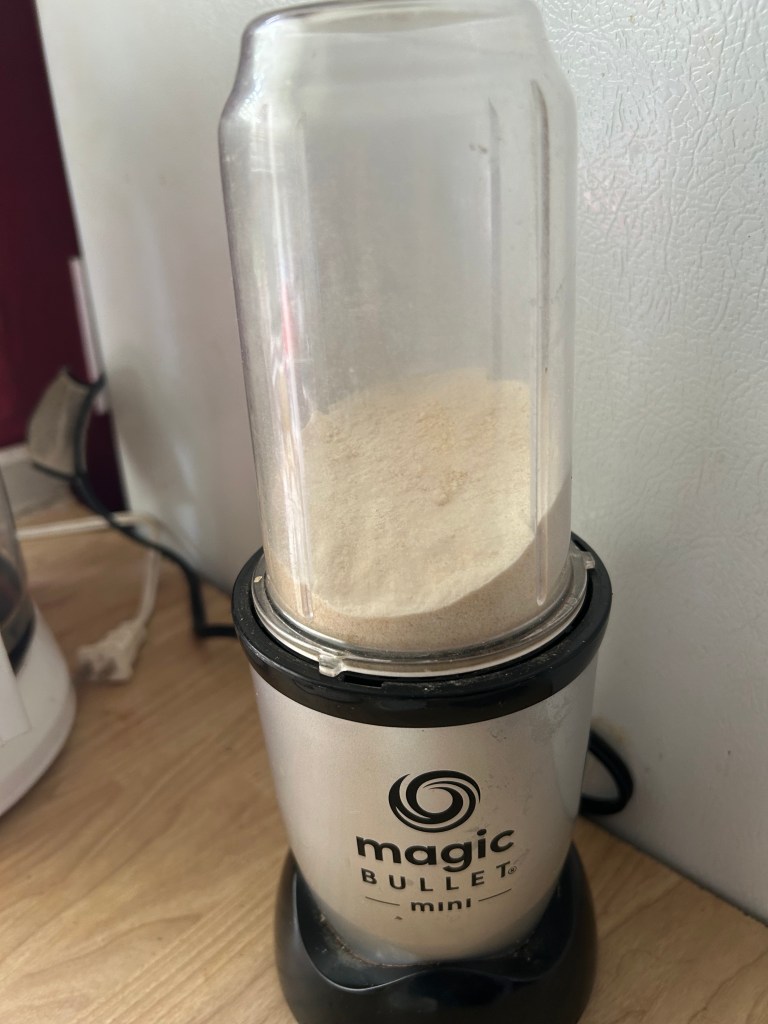
Once the minced garlic was completely dry, I placed the dried clumps of garlic into a smaller food processor. I pulverized the dried minced garlic into powder.

Storing Garlic Powder

To store the garlic powder, I poured some of the garlic powder into a shaker to use right away, but I placed most of the garlic powder into a sealable plastic waterproof container.

Now I have enough powdered garlic to last for at least the next two years.

Is it Worth the Effort?

Some people would ask if all the work involved in drying my own garlic powder was worth my time? The answer to that would depend upon several factors.

If I were doing it to make money from the enterprise, my answer would be a resounding “no”. As cheap as it still is to buy dried garlic from the store, there’s no way that making my own would create a viable income.

If time were at a premium, making the garlic powder would probably be a distraction from other more pressing projects. If

If I had to purchase the garlic that I dried, unless I got a great deal on that garlic, making my own powder wouldn’t be worth the cost either.

However, I dried the garlic as a learning experience to see if I could do it. I enjoyed the experience. I had the garlic and didn’t want to waste it. The garlic cloves I used were the garlic cloves that wouldn’t last long unless I processed it right away. The garlic powder that I produced was far superior to the garlic powder that I can purchase at the store.

I would recommend others might want to do the same. A homeschooling parent or simply a parent who wanted to teach their children where their food comes from could use this project as one of their life lessons.

Someone with garlic that they didn’t want to waste would find that making their own garlic powder is a good way to utilize the garlic in a product that they are already purchasing and can store it in a relatively small space.

If you’re interested in producing a superior product like garlic powder from homegrown garlic and have the time to invest in producing the powder for your own use, I invite you to try your hand at it yourself. It is a satisfying feeling knowing that is just one more thing that you don’t have to go to the grocery store to purchase.

Our Gardening Update

It has been so long since I have written on this site that I thought I would catch you up on what we are doing now in the garden.

This year we have grown most of the vegetables that I feature in my book The Survival Garden.

We planted much more of our garden in raised beds and doing has its advantages over growing in garden rows.

Using Raised Beds and Mulching Them

The advantages of planting in raised beds include the fact that we can plant intensively in the bed. We can also focus our resources. These resources include water, fertilizer, insect damage control tools, and disease prevention, and we can mow between the beds. In addition, because the beds aren’t walked on, the raised beds keep the soil aerated for the benefit of plant roots and soil microbes.

We mulch all our beds with our grass clippings. These grass clippings not only conserve water and protect the soil from getting too hot or too cold, but the grass clippings feed the soil by adding nitrogen and becoming food for the microbes too.

The Harvest Has Begun!

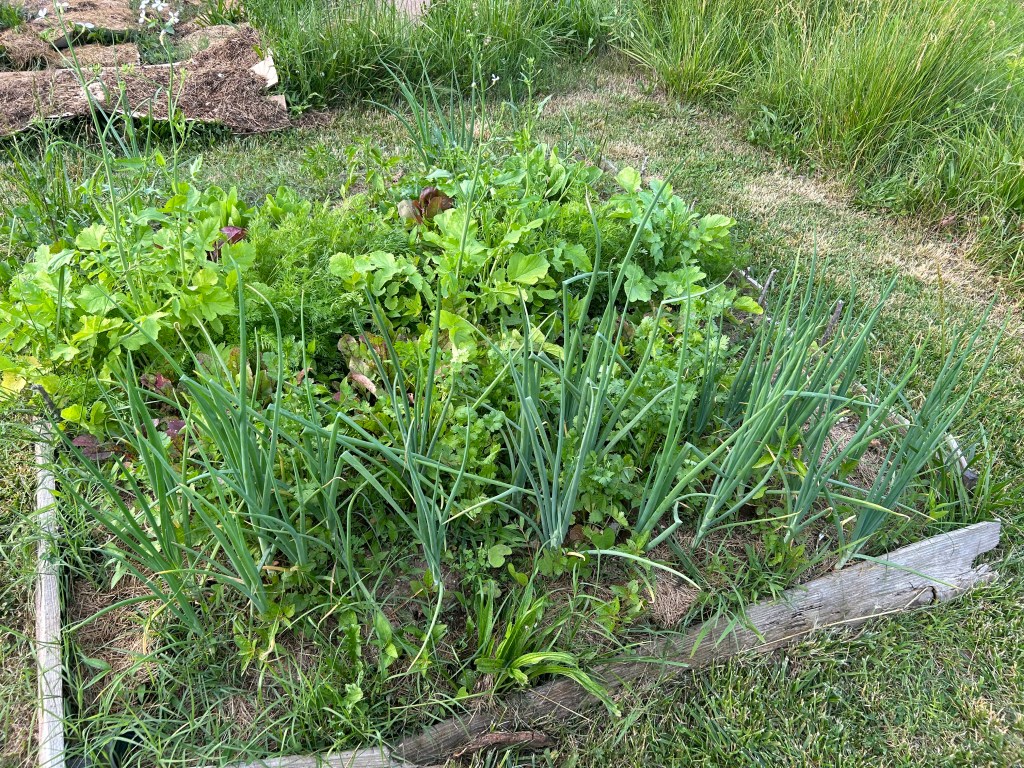
We’ve been eating greens from our “salad bar” for several weeks now. I pick and wash the greens and then use them in sandwiches and salads.

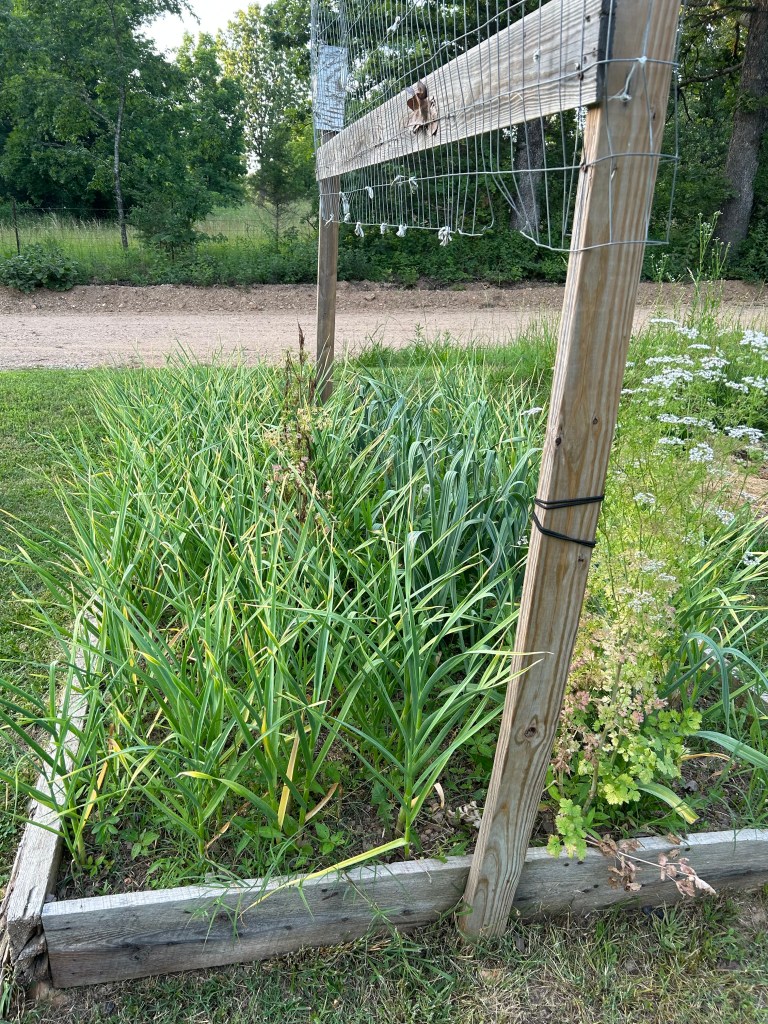
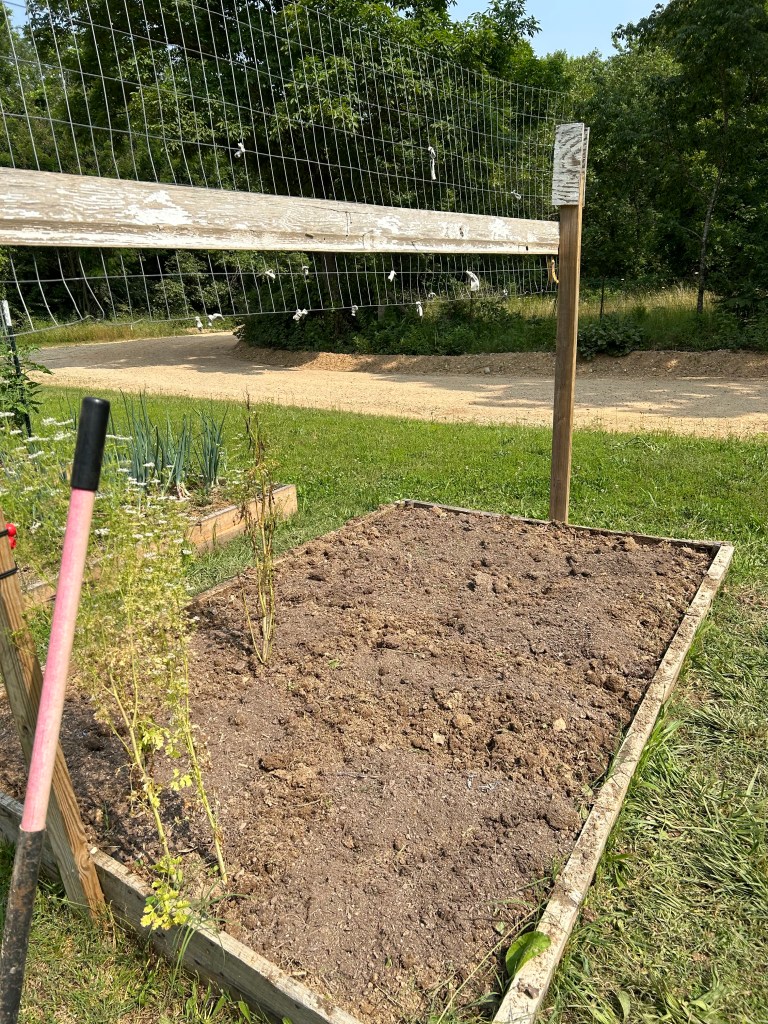
We just harvested our garlic and are now planting our sweet potatoes in the same area where we had the garlic. One day we pulled the garlic and cleared out the weeds and the next day we conditioned the soil and that evening we planted our sweet potato slips.

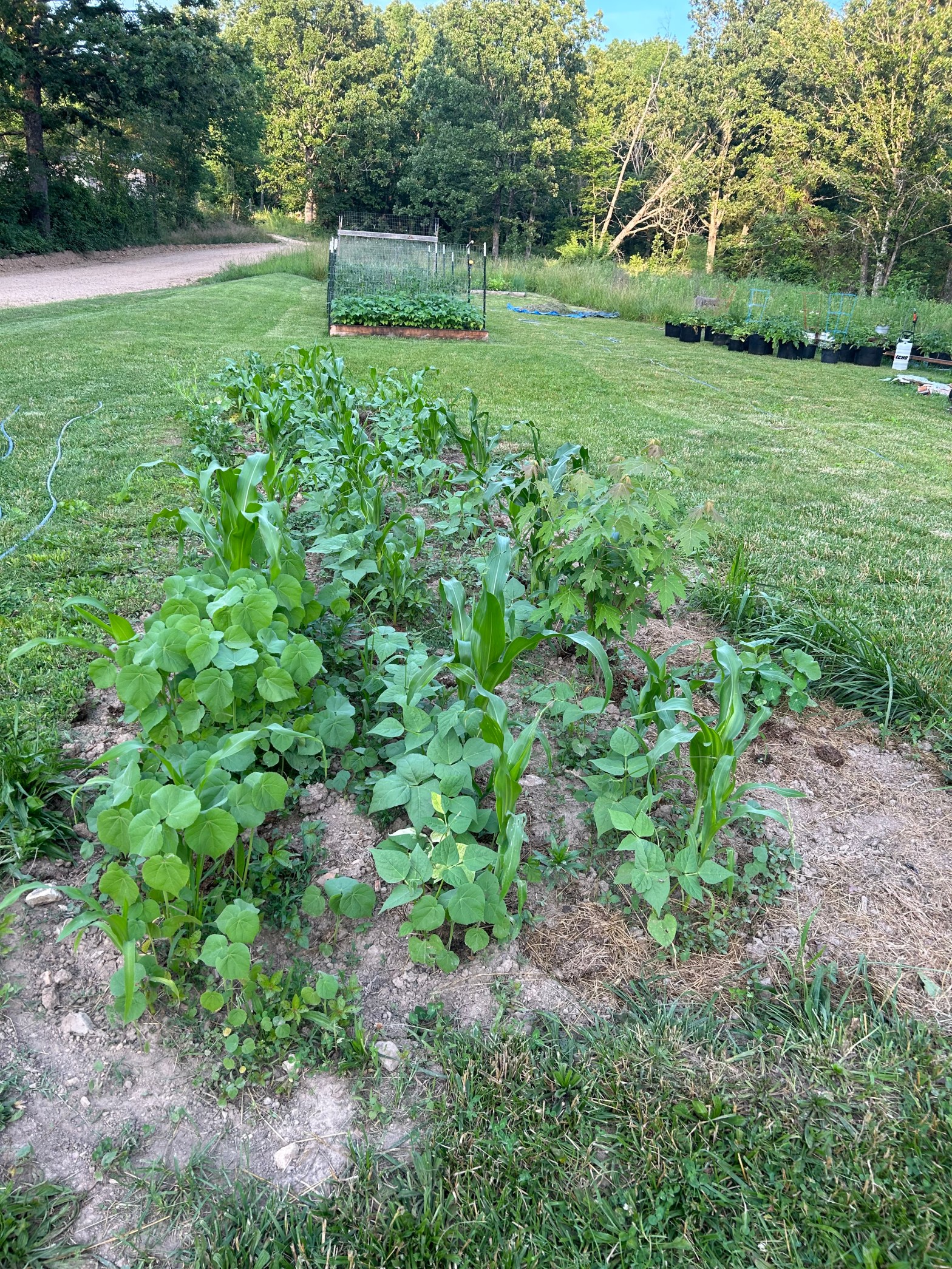
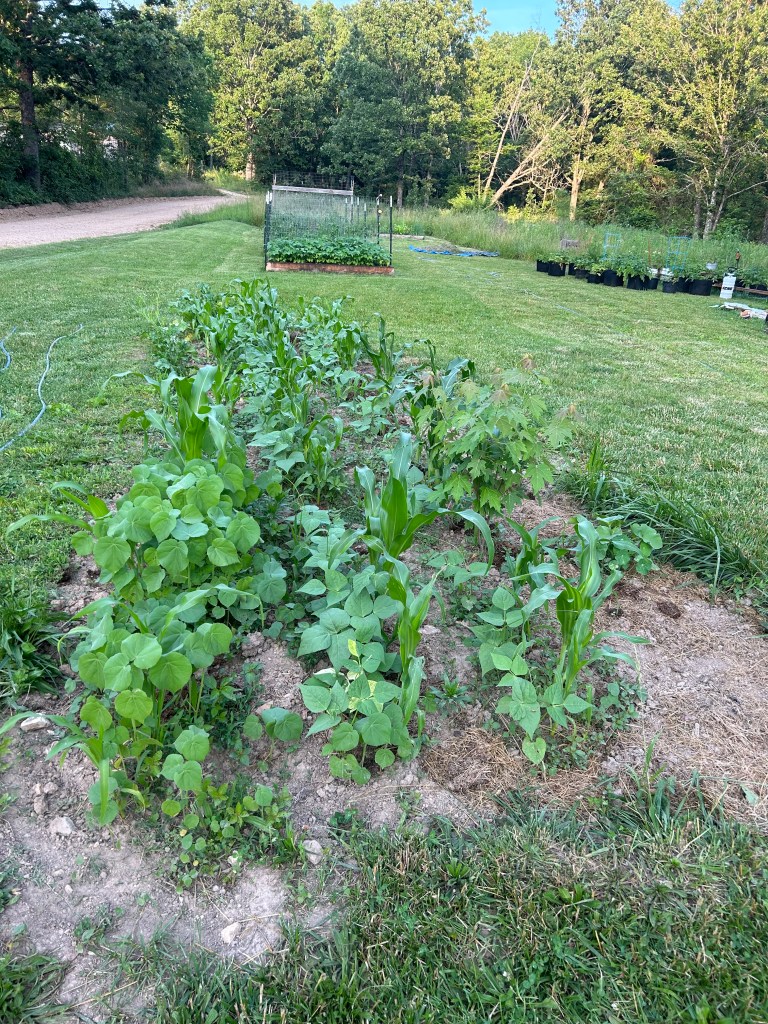
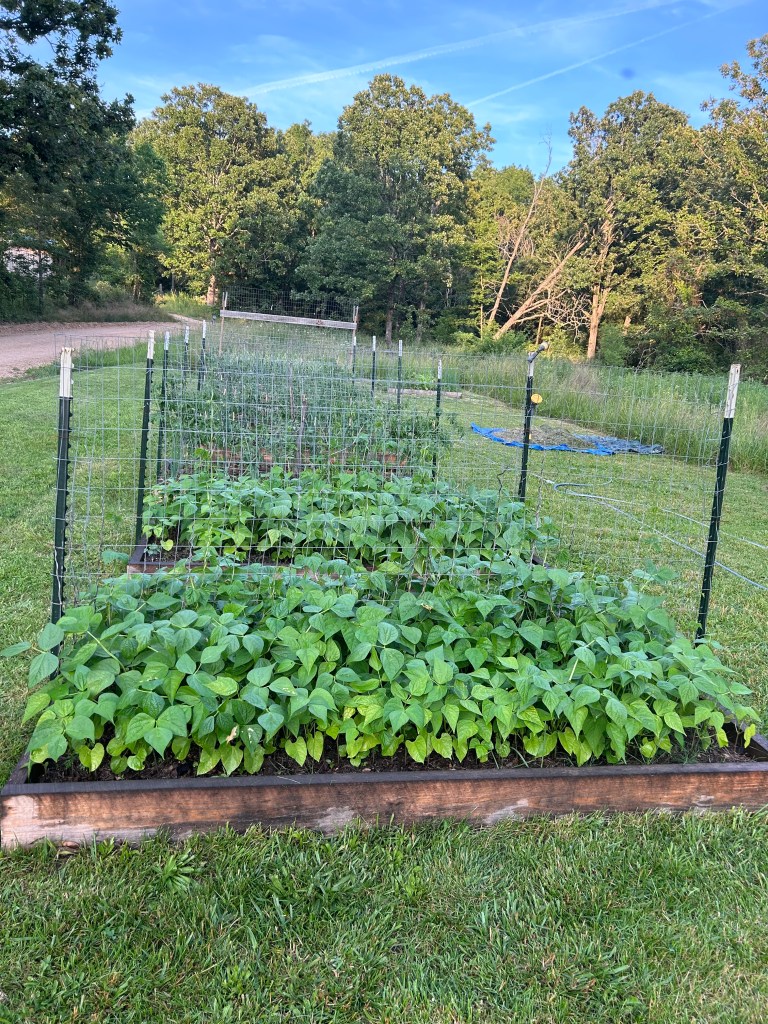
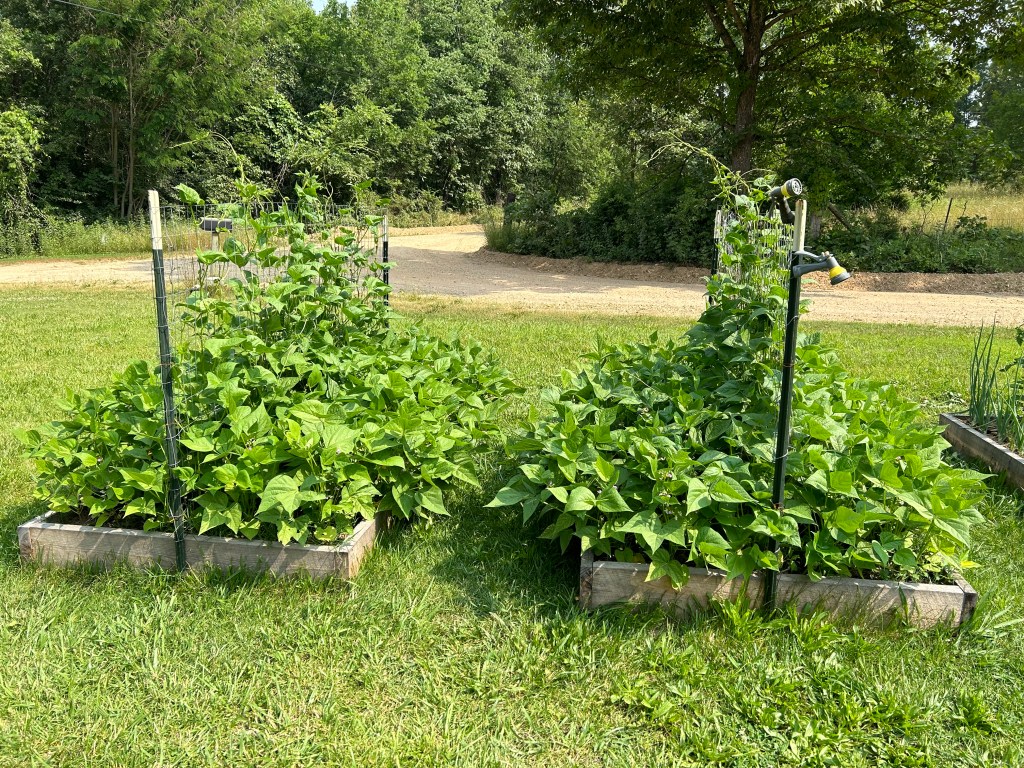
Our beans are growing fast. These are our beans last week.

Our bush beans are now blossoming, and our pole beans are diligently climbing the fences that we provided for them. By the end of this week, we will be picking the first bush beans. We should have enough to eat fresh and have some to either sell at farmers’ market or can. I will probably be doing a load of green bean canning next week.

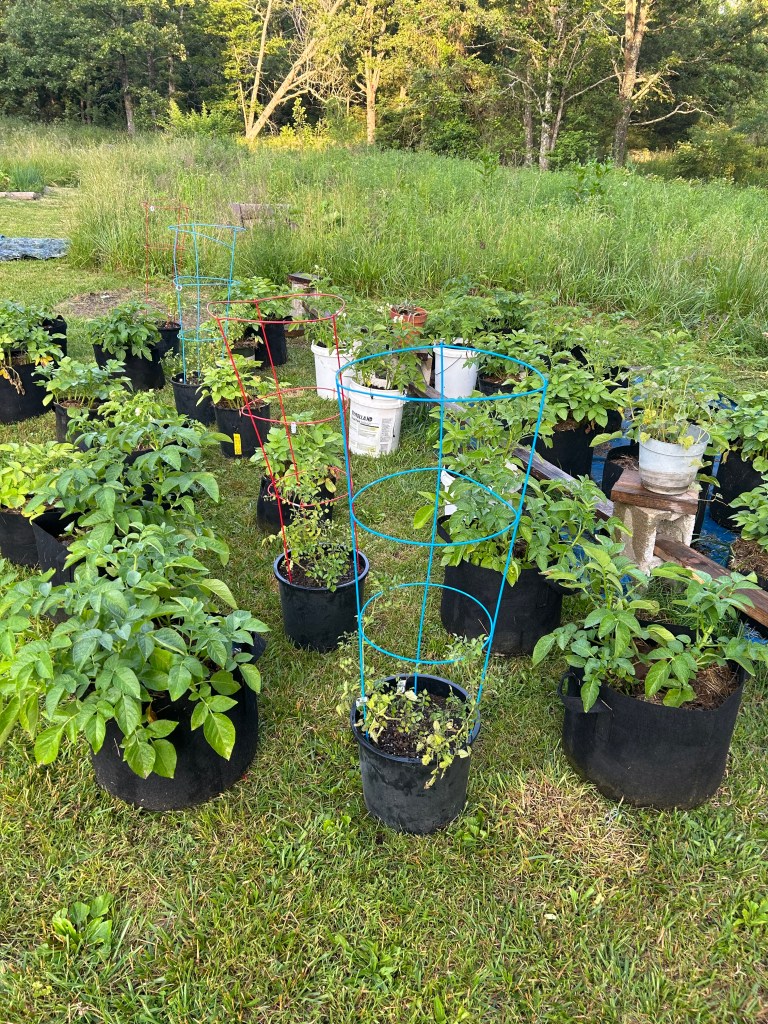
Soon we will also harvest our potatoes too. These we’ll use to eat fresh, can in green beans and new potatoes, dry in the dehydrator, and prepare and freeze some for French fries and hash browns.

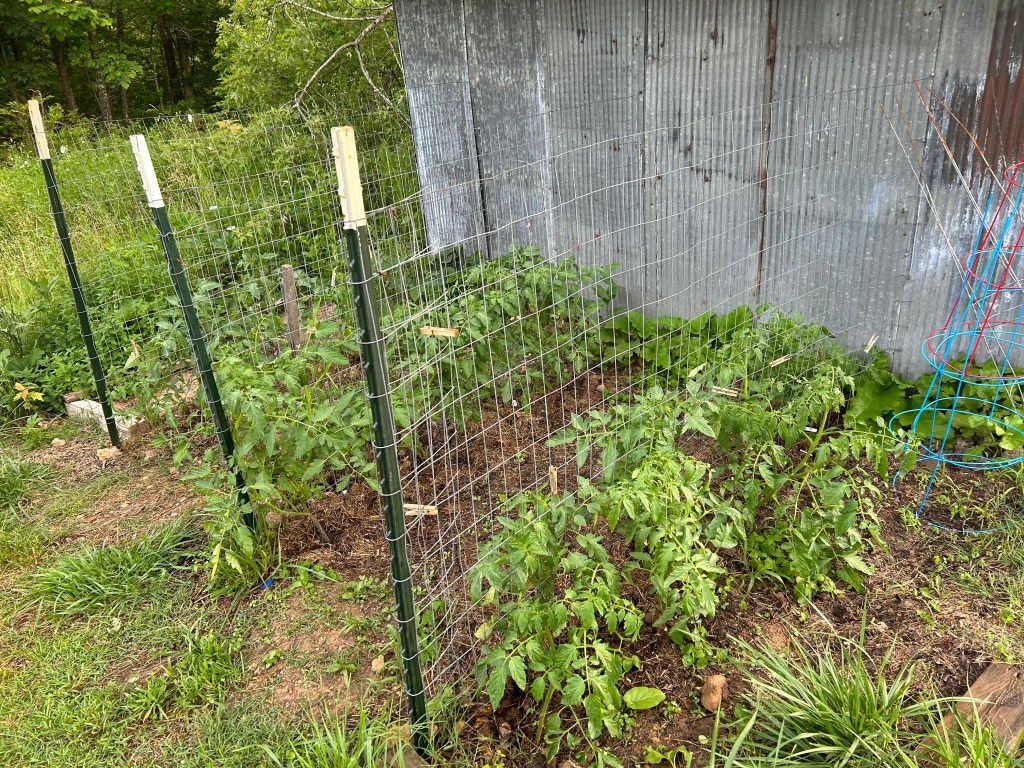
Our tomatoes, peppers, and onions are growing like crazy. We have blossoms and fruit on the tomatoes and peppers and the onions are developing bigger bulbs than we’ve had in this garden.

Our carrots are growing as are the beets. We hope these will be ready within the next few weeks as well.

I hope you take the time to read the book The Survival Garden and apply at least some of the methods so that you don’t have to can, freeze, or dehydrate all of your foods.

The Gardening Season is Winding Down

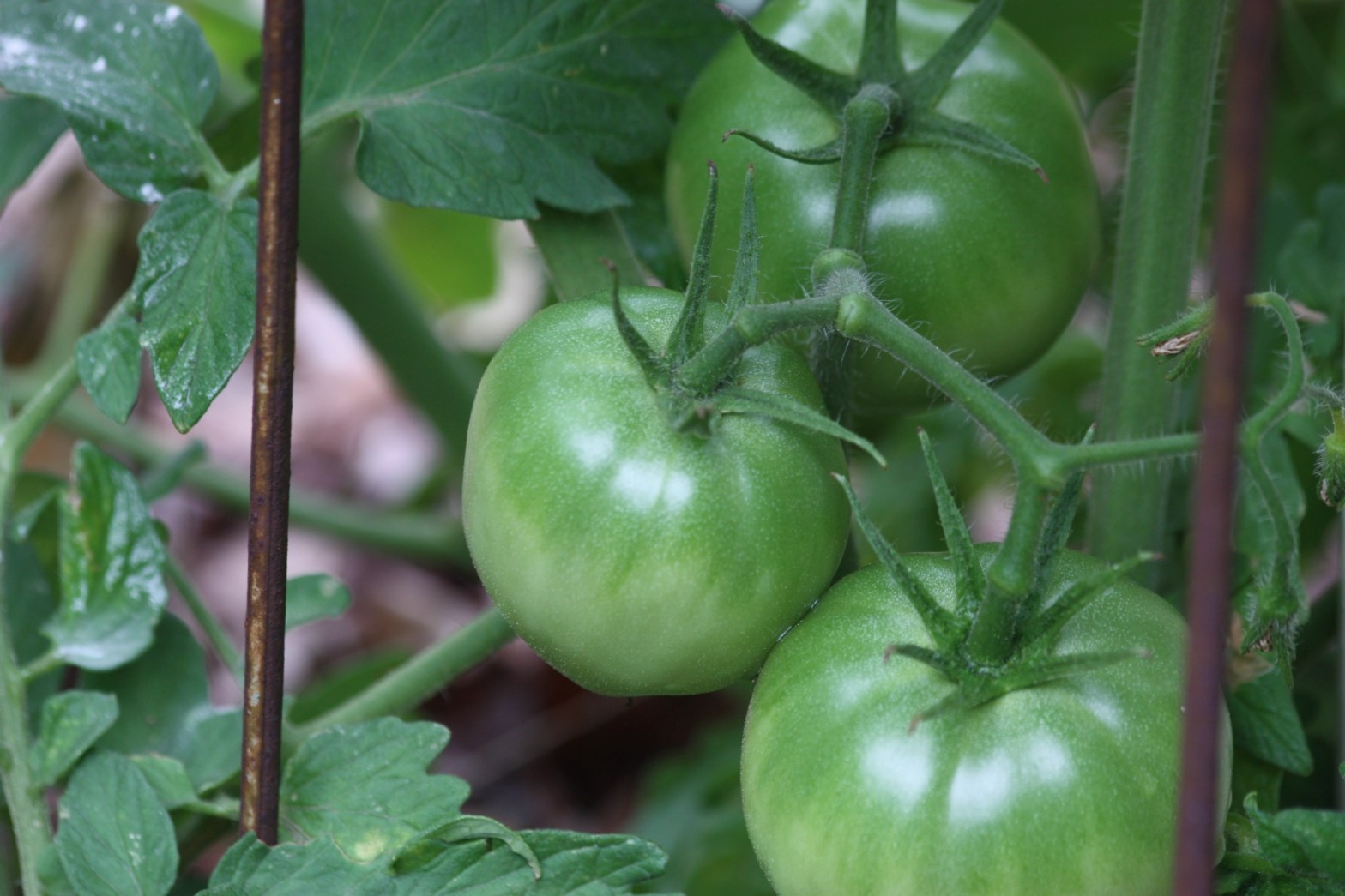
green tomatoes on the vine
When your green tomatoes won’t ripen, use them to make foods like green enchilada sauce.

During the past several weeks that I have been attending the farmers’ market, I have only had green peppers and garlic to sell there for vegetables. Last week we had the farmer’s market at the Black Gold Walnut Festival in Alton, Missouri and I gave away more peppers than I sold and didn’t sell any garlic.

I have been using my tomatoes myself. Most recently, I have been making red enchilada sauce and tomato juice with the ripe tomatoes. It is getting close to frost time and that means that I will soon have to pick the remaining tomatoes no matter how green they are. Fortunately, one of the recipes that I will be using is a recipe for green tomato enchilada sauce that I will can and use when I make chicken enchiladas during the winter season. Here’s the recipe I will be using.

Green Tomato Enchilada Sauce for Canning

The ingredients:

2.5 lbs green tomatoes, diced

1 large onion, diced

6 cloves garlic, chopped

2 teaspoons ground cumin

3 green peppers (bell, Anaheim, poblano, or any combo), broiled until blackened then peeled, seeded, and roughly chopped (optional)

3 1/2-4 cups water or broth

1-2 tsp Salt

Instructions

Wash all the jars and canning equipment in hot soapy water. (Each batch makes about 7 pints). Rinse well.

In a large pot or skillet, sauté the onions in some olive oil until translucent and soft.

Add the cumin and garlic and cook, stirring occasionally for a few more minutes. Add the tomatoes, roasted peppers, and water or broth and salt to taste. Bring to a simmer and cook for about 20-30 minutes until the tomatoes are mostly broken down.

While the sauce is cooking, sanitize clean canning jars in boiling water for 10 minutes.

In a separate pan begin simmering water and add the canning lids about 5 minutes before you will need them.

Once the sauce has cooked, blend or process the tomatoes in the food processor until smooth. Taste and adjust seasoning. Return the sauce to a boil.

After you sanitize the jars, remove the jars from the boiling water and add 1 Tbs of lime juice to each jar.

Fill each jar with the sauce, leaving ½ inch of headspace. Wipe the edge of the jars to make sure they are clean and place the lids on the jars. Lightly tighten the rings (just as tight as you can with two fingers).

Process the jars in a water bath for 35 minutes (or 20 minutes in a pressure canner) at sea level (you will need to add additional time as you increase in elevation).

How about you? What is your favorite way to use end-of-the-season tomatoes?

A Bumper Crop of Peppers

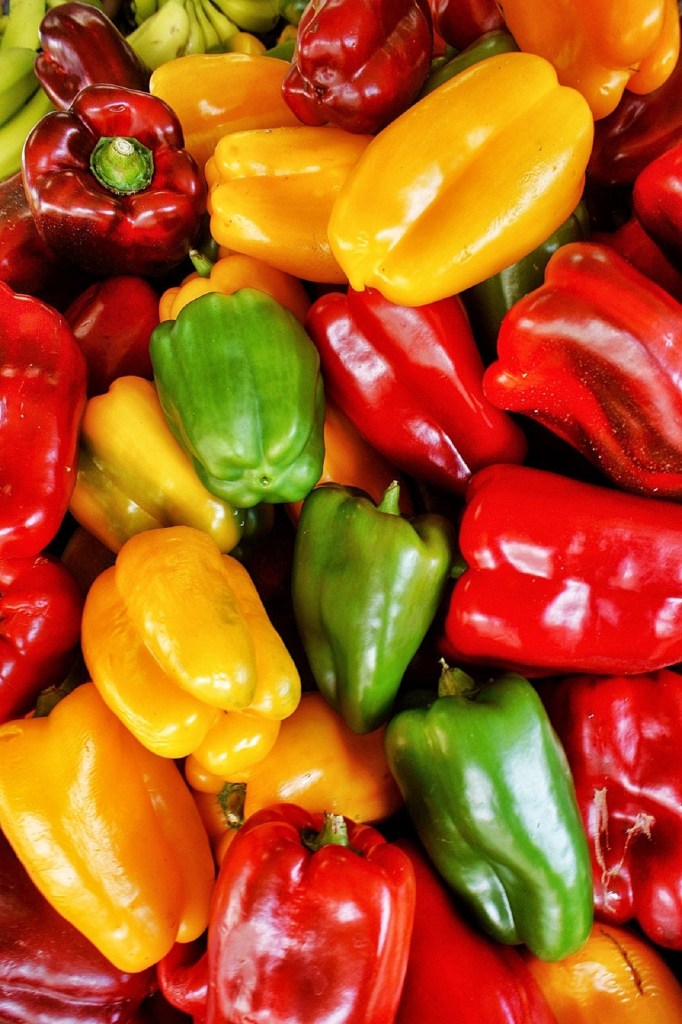
Last year and the year before last, I didn’t have that much luck with peppers. The year before last I had quite a few hot peppers, enough to add to the cucumbers for hot pickles and a few to dry, but not much else. Last year I had a few sweet peppers, but barely enough for the canning, I had to do. This year is a different story. I have plenty of peppers both hot and sweet peppers to do everything I want to do with them and then some. I sold a few peppers at the farmers market, but I am not the only one to have peppers there, so, I have had to figure out what to do with what I have.

Canning Hot Peppers

Last year I had to buy some hot peppers at the farmers’ market to make Rotel, so I have plenty of that. It’s just diced tomatoes and hot peppers that I canned together in vinegar and water. This year I am canning some sliced jalapeno peppers in vinegar water in half-cup jars so that I have a few to add to roasts when I cook them in the crockpot. I am also roasting a few larger hot peppers to add to bigger roasts. I don’t need many of those, but they come in handy.

I also have been making small amounts of red enchilada sauce. I first made the sauce and canned them in the half-cup jars but found that there really isn’t enough in a jar for a good batch of enchiladas so I am now making them in cup- and pint-sized jars. You want a good amount of red sauce when making enchiladas or burritos.

I have also used them in making salsa, but for now, I have some left over from last year and made enough for this year as well.

Drying Hot Peppers

When I don’t need to use them in canning, I dry most of the hot peppers. It’s as easy as cutting off the tops, cutting them in half, and laying them out on the food dryer to dry until they are crunchy crisp dry. If there’s any pliability left in them, I leave them longer. Right now, I am just putting the dried peppers into a sealed container. Later, I will put a lot of them through the food processor to grind them for chili powder.

I have a lot of cayenne peppers coming in, so I am drying them separately from the rest of the hot peppers. I’ll be making cayenne pepper powder with those later in the season as well. The process is the same as with the other peppers, but there’s nothing like good fresh cayenne when cooking.

Hot Pepper Sauce

One thing that I am not making that I would like to try perhaps next year is to make pepper sauces. I need to study more on the subject and then grow the right peppers for the project. I’ll let you know next year if I will be doing this.

Sweet Peppers

I use sweet peppers in many of my tomato products. I use them in my salsa along with the hot peppers and my tomatoes. I also use them in tomato sauce. I like making pasta sauce and pizza sauce. The pasta sauce I make in pint jars and the pizza sauce I make in half pint jars. This way I have just enough for a meal and not much more than that.

I have also used them in making relishes, but right now, I have more than enough relish from two years ago. We don’t use a lot of it so I’ll wait until next year before I make more. Also, this year I didn’t get a lot of cucumbers or zucchini squash so relish and pickles where the sweet peppers usually go aren’t a good option this year.

Most of the sweet peppers this year are going into the freezer. It’s a really simple process. I do the peppers two different ways. One way is that I cut them into strips to fry for sandwiches and the other is that I chop them up and spread them out on a cookie sheet and put them in the freezer. When they are frozen, I scrap them off the cookie sheet and put them into a bag, and then back into the freezer. This way, I can get as many or as few as I want at a time. To use them, don’t thaw them, but use them frozen in cooking. I like to use them in anything that I use peppers and onions in including omelets and fried potatoes O’Brien. They can also be added to soups and stews and other cooked dishes that require sweet peppers.

Do you have a bumper crop of peppers this year? If so, please share in the comments below, I would love to hear about it!

12 Vegetables that Don’t Require Canning, Freezing, or Dehydrating

The harvest is coming in and many of these vegetables can be kept fresh all winter.

Though astrological fall doesn’t happen for another few days, metrological autumn is upon us here in the Ozarks and the harvest is coming in. Though we can get vegetables throughout the year, during the autumn, prices are the lowest that they are ever throughout the year. Autumn will get you better prices on vegetables of any form whether fresh, frozen, canned, or dehydrated. This has been true throughout history, and even though we have been able to get various types of food in recent years from all over the world thanks to transportation innovation, it’s still true today. Recently, the world has been in flux based on climate change, a worldwide pandemic, and war and this has affected not only our worldwide food supply but also how we are able to transport and prepare it. It is even more imperative than ever to have an adequate food supply on hand.

There is an expected worldwide food shortage and the more food we can get from local sources, the better. However, there is only so long that much of what we get locally can be used fresh. Tomatoes, peppers, lettuce, and the like can only last so long before they spoil. We can prepare many of these fresh foods for the freezer, can or dehydrate them for future use because they won’t keep as fresh vegetables. However, there are some vegetables that don’t need to be stored in any of these ways. They can be stored for several months beyond the time they are picked.

For any of these vegetables that you want to keep for several months, be sure to only store perfect specimens. Bug damage or cuts in the vegetables decrease their longevity.

Onions

Whether you get your onions from your garden, the grocery store, or buy them from a local grower, you can store onion bulbs for several months.

Although you can’t store green onions for longer than a few days, you can store onion bulbs for up to several months.

Before storing your onions, let the skins of the onions dry and their necks begin to shrivel. Spread the onions in a single layer. Keep the temperature around 40 degrees to 50 degrees Fahrenheit (4–10 degrees Celsius) to keep the onions longer. Store onions individually and don’t store them with the other fruits and vegetables since they can reduce the smell and taste of the onions. You can use a pantyhose to store the onions. Simply cut off the legs of the clean pantyhose, place an onion in the foot of the pantyhose, then tie a knot for each onion. Keep adding the onions until the foot is full. and hang the braided bags in a dry cool place with the recommended temperature.

Uncut onions will last several months this way. Use cut onions within two to three days.

Garlic

The storage temperature for the garlic is most important. The ideal temperature for storing garlic is 60–65 degrees Fahrenheit (15–18 degrees Celsius). Although keeping at this temperature is not easy, the closer you can keep your garlic at these temperatures, the longer the garlic will keep. Keep your garlic away from your stove or heat source.

Don’t store them in the refrigerator because it is too cold. and its moisture causes the garlic to rot sooner. Nor should you store it in plastic because it prevents air circulation, increases moisture, and speeds up disintegration. Better to store garlic in a cupboard in a paper bag (or no bag at all) than in it is to store them in the refrigerator or a drawer.

Potatoes

Potatoes thrive in humid conditions. This durable crop is comprised of 80 percent water. The best places to store them long-term should be dark, well-ventilated, and cool areas — but not cold and where they won’t freeze. Keeping temperatures below 55 to 67 degrees Fahrenheit (12 to 19 Celsius) will prevent the growth of sprouts on potatoes longer and reduce both shrinkage and a loss of nutrients. Ideally, keeping potatoes between 43 to 55 degrees Fahrenheit (6–12 Celsius) will allow them to keep for multiple months without rotting or sprouting eyes especially if they are varieties that are meant to keep longer (indeterminant late potatoes).

Sweet Potatoes

Newly harvested sweet potatoes with the roots still attached are the best option to use. Plump vegetables have more usable flesh to eat than skinny ones. It is even more important to be sure that sweet potatoes are not bruised. Shake off the dirt, but don’t wash.

Sweet potatoes should be cured for one to two weeks. This curing process forms a second skin over scratches and bruises. Place in a location where you can keep temperatures between 75–80 degrees Fahrenheit (24–27 degrees Celsius) with a relative humidity of 90 to 95 percent. Use a small electric fan in the area to keep the air circulating to prevent rotting and molding. Do not allow sweet potatoes to touch one another. Cure in this manner for between 7–14 days for longer storage.

Once the sweet potatoes are cured, wrap each one in newspaper. This will allow just enough air circulation to prevent the sweet potatoes from rotting too quickly. Store these individually-wrapped sweet potatoes in a cardboard or wooden box, or wooden basket. Do not use an airtight storage container. Place an apple in the box to prevent the sweet potatoes from sprouting. Store the box in a cool dark place, maintaining a consistent temperature of 55–60 degrees Fahrenheit (13–16 degrees Celsius), a basement or root cellar is ideal. Do not refrigerate. Stored this way, sweet potatoes last up to six months.

Carrots

Don’t wash the carrots before storing them. Simply remove the green tops. Store in a temperature around 41 degrees Fahrenheit (5 degrees Celsius). Store in a wooden box with slightly dampened sand. Spread sand out on the bottom of the box and the first layer and then put carrots inside without the carrots touching.

Continue adding alternate layers of sand and carrots until you have stored the whole harvest. The carrots will keep fresh for several months.

Beets

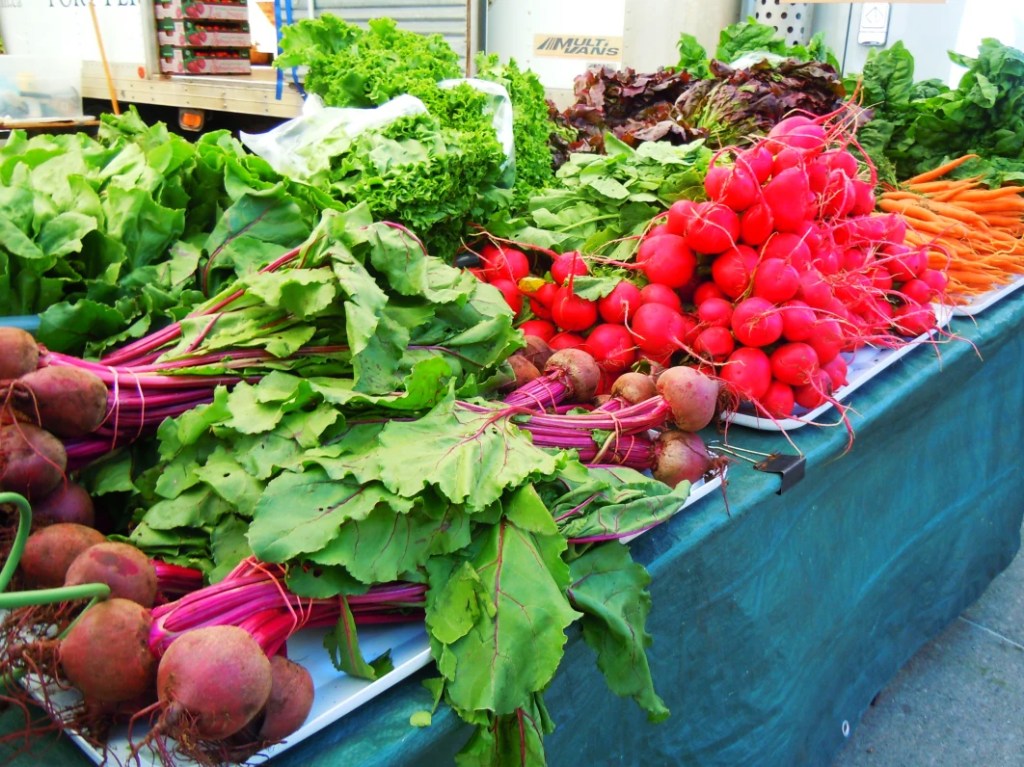
Beets are easy to store in the refrigerator. Properly stored beets can last for weeks or even months. Remove beet greens, don’t wash them, and store them in a plastic bag in the refrigerator. Simple.

Turnips

Store undamaged roots. Gently rub soil from the roots before storing them. Store the turnips in a cold moist location at or near freezing (32–40 degrees Fahrenheit or 0–4 degrees Celsius) and at 95 percent humidity. Store them in a wrapped moist cloth or paper towel in a perforated plastic bag in the vegetable drawer in the refrigerator. Turnip roots can also be packed in a bucket or plastic storage container or cooler in moist sand, peat moss or sawdust.

Corn (Maize)

Corn dried on the stalk and further air dried so that it can be stored indefinitely when removed from the cob and stored in sealed mylar bags. The corn can be used to make corn flour or meal or made into hominy and ground into grits.

Dried beans

Beans seeds can be dried on the vine, further air dried, and shelled. Heat beans in the oven at 200 degrees Fahrenheit (100 degrees Celsius) and place them in a container or seal them in a mylar bag for extended preservation.

Peas

Treat peas in the same way that you prepared the dried beans.

Squash and Pumpkins

To store winter squash, you’ll need ripe fruits. To determine ripeness, push a fingernail into the rind. If it is hard and nearly impossible to pierce, it’s ready. Cut the squash off with pruners and leave a 3-inch (8 cm.) stem for pumpkins and 1 inch (2.5 cm.) for winter squash. The stem helps prevent rot when you are keeping winter squash in storage.

After you harvest the squash, rinse off the dirt and lay the squash into a single layer to prevent damage to the rind. Next, you’ll want to cure the rinds against moisture, insects, mold, and bacteria. Cure the squash for ten days at temperatures of at least 80 degrees F. (27 C.) and 80 percent humidity. Acorn squash doesn’t need to be hardened off, as they lose their quality. Turn the squash occasionally to expose all sides to air.

Store the squash by lowering the temperature. Every 18-degree reduction in temperature increases the time for storing winter squash. Keeping winter squash in a temperature of 50 to 55 degrees Fahrenheit (10–13 Celsius) is the optimum range for most squash. Good ventilation is a necessity for keeping squash.

You Will Save Money

Storing these fresh vegetables whether purchased from the grocery store, a local source or grown in your own garden will save you a lot of money in your grocery bills without having to do anything more than store them until you can eat them.

For More Information

book cover of the survival garden book
You will discover more about these vegetables in The Survival Garden.

You can grow as many of these vegetables in your own garden as you have room to plant, and you can start now to get a head start on the upcoming gardening season by planting garlic and purchasing my book about this topic. The book is The Survival Garden and it is available on Amazon in paperback and on Kindle. Check it out today.

Seven Ways We are Saving Money and Time in the Garden

This year our raised beds did better than other beds so this next year we will be building more raised beds.

The cost of food is rising faster than any other purchases we make regularly. One of the ways that many of us are helping to make ends meet is through gardening. Things are not expected to get any better (or even worse) next year, so my husband and I are streamlining our gardening process with garden beds and saving money where we can.

Get Good Quality Tools

The first thing that we did was to purchase good quality tools to work with. Not purchasing cheap tools may not sound like a way to save money in the garden, but it will in the long run. Last year we purchased inexpensive hoses and this year we are having to replace them with better hoses because the hoses we purchased didn’t last. By spending a little more now, if we maintain them properly, the hoses should last us several years rather than one season.

Going No-till

After having more success with our raised beds this past spring and summer in our two raised beds where we grew our best tomatoes and hot and sweet peppers (along with annual flowers and herbs), we decided to build even more raised beds using as many free materials as possible.

We are building the raised beds using lumber seconds that we get from our local lumber yard. E Because they aren’t perfect boards, we are getting a discount on them. We don’t use treated lumber because treated lumber emits poisons into the soil which we don’t want.

We find that 2×8 foot lumber is right for the job and the least expensive length to purchase is 8-foot boards. We use three of the boards. We cut one in half for both ends so that we have a bed that is 4×8 feet long. We screw the boards together and brace them in the corners. We prepare the soil under where the bed is going. We mow the grass at the lowest setting and then apply chicken manure in the area and cover it with local sawdust. We then cover that with cardboard and place enough down so that it extends beyond the raised bed frame.

Once the frame is in place, it is time to fill it. We add a couple inches of sawdust and scatter chicken manure over that and then add as much topsoil as we can get on top of that. Next, we use a simple sheet composting system to fertilize the ground during the off-season.

Simple Compost of Household Waste

One of the easiest ways to utilize compostable materials from the house is to put them directly in the garden area where you want to grow your plants next season. Personally, I like to just drop the garbage onto the growing surface during the non-growing season and allow the chickens free range in the area, to eat what they want and leave their own droppings behind. Then when I plant the area, I put a fence around it to keep the birds out as well as other wildlife.

Shred yard wastes for mulch

This fall when we mow the lawn, we capture all of the grass clippings in our grass catcher and incorporate them with the household wastes that we are bringing into the raised beds. This way, when the chickens scratch the surface, they are incorporating the clippings into the first few inches of the soil for the soil microbes.

We also incorporate fall leaves into the garden beds. Again, we use the lawnmower to chop up the leaves and gather them and then dump them into the beds. The chickens turn the materials in the bed for us to add to the ingredients of food for soil microbes.

Use Saved Seeds

I have looked at the price of seeds recently and I understand why people say that the price of gardening is so expensive. I started collecting my own seeds in the fall to use for the next year. Seed saving, however, is a skill, and not every seed is handled the same way for it to be viable. However, the skills are not difficult to learn.

We Grow Our Own plants

This past year we grew more of our own plants for transplants from seeds than we had in the past. The process of growing seeds for transplants involves some expenses at the beginning like you need good lighting or your seedlings will get too leggy to plant and you should use the proper germinating medium in which to grow it. We discovered that growing our own plants from seed too takes skill, but it also saved us a lot of money.

Recycle Items in the Garden

Above, I mentioned using household garbage, yard waste, and cardboard in making our garden beds, but there are so many other things that we recycle in the garden. We use plastic milk jugs to pick berries and to make cloches to cover plants on cool early spring days and nights.

We also could also poke holes in the bottom of them and bury them around newly planted tomatoes and peppers and fill them every few days with water to soak in around the plant roots over an extended period. Watering this way is better than surface watering because we’d be watering at the roots of the plants and not allowing the water to evaporate before it benefits the plants.

Now It’s Your Turn

There you have it, the seven ways that we are saving time and money for next gardening season. I would love to hear what other ways you use to save time and money in the garden. What do you do?